
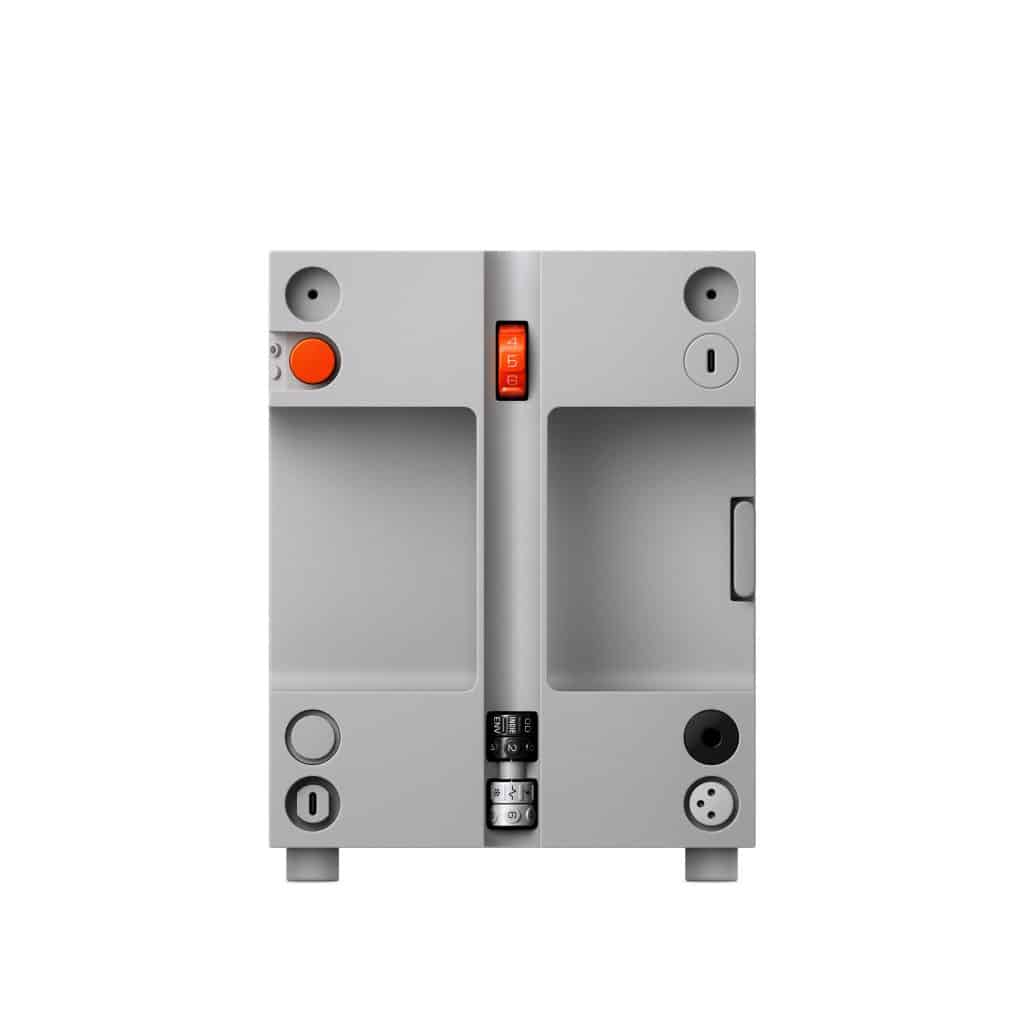
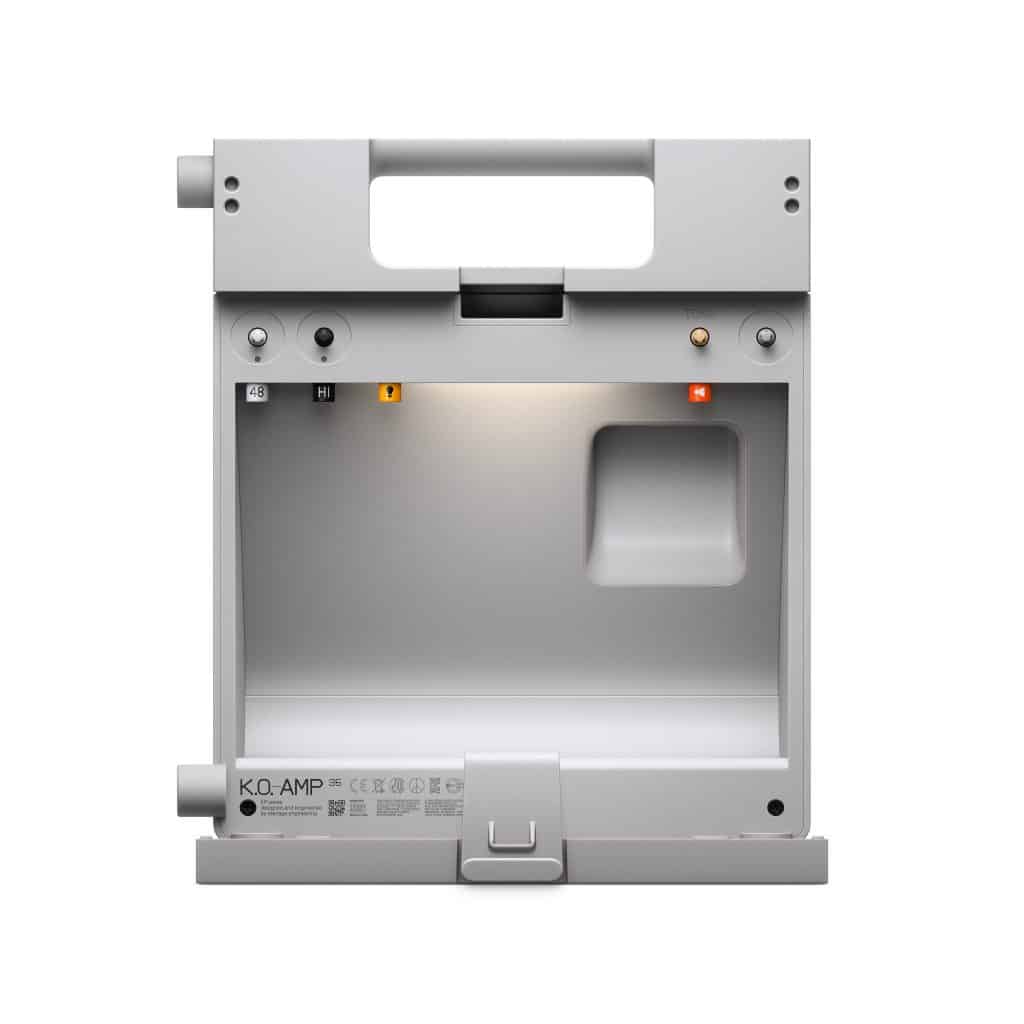
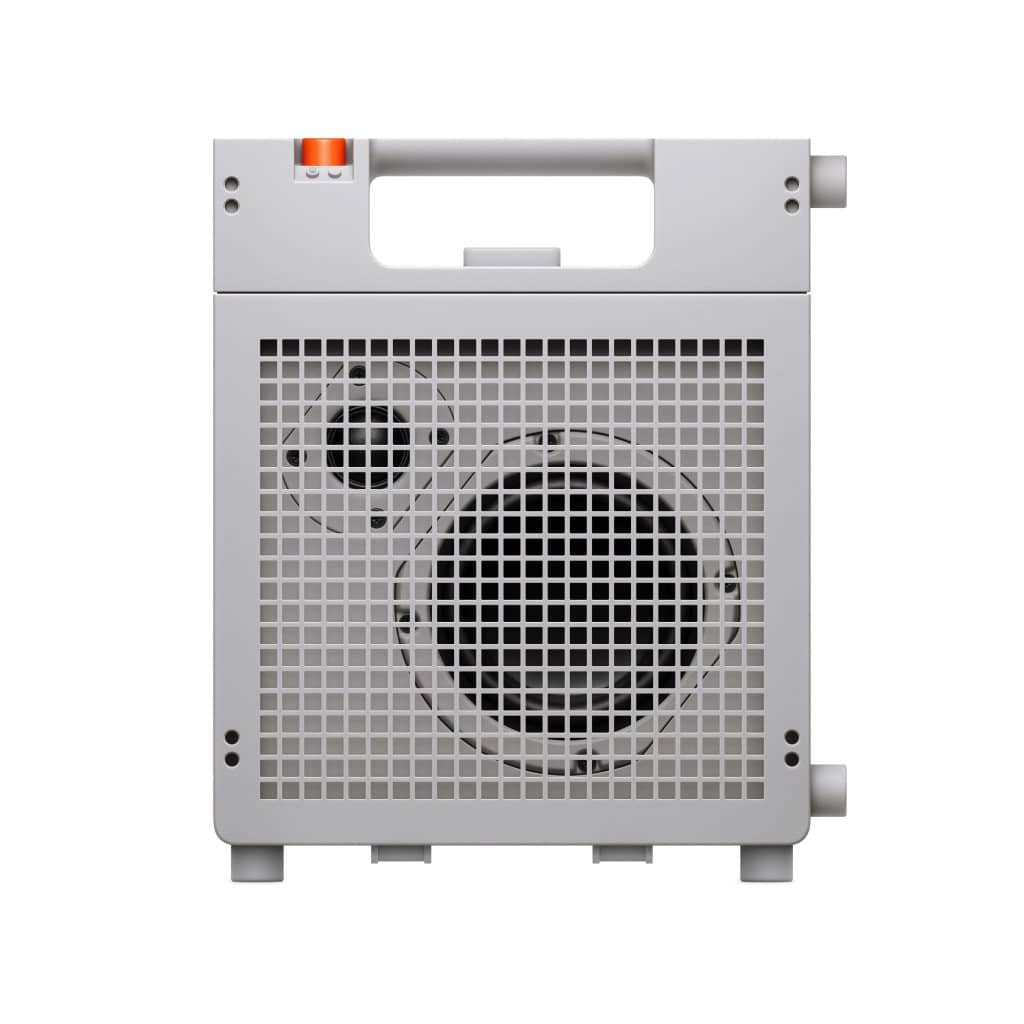
A light grey cube with a carry handle, a square speaker grille and a few orange buttons on top. Then you lift the lid, a small lamp switches on, and you find a tidy compartment with the gain knobs, a mute button, a couple of switches and enough space for your cables. Or, as Teenage Engineering cheerfully suggests, for your drink.
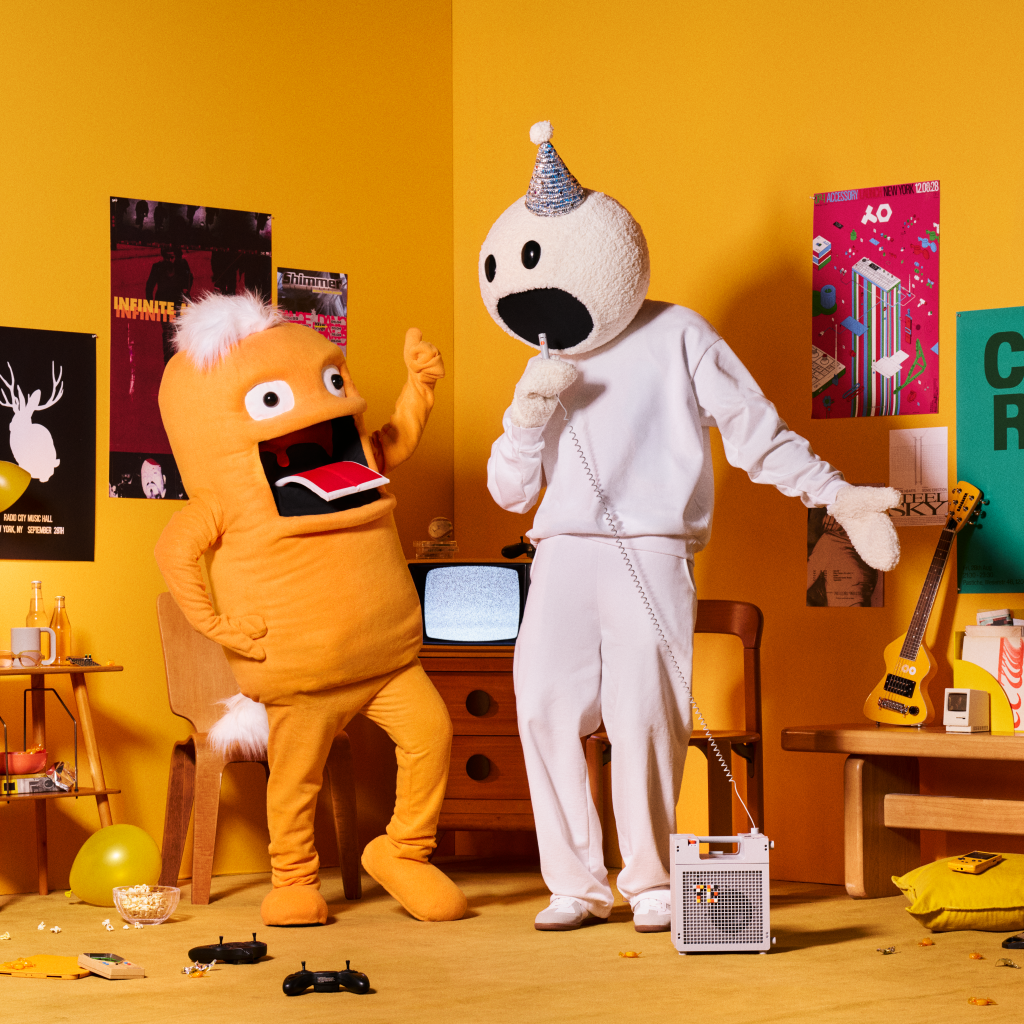
This is the EP-35, the portable amplifier the Stockholm company launched at the end of October, and the lid tells you most of what you need to know about it. It is a guitar amp, a karaoke machine and a Bluetooth speaker in one battery-powered body, designed less for the bedroom and more for the park, the rooftop and the rehearsal that slowly turns into a party.
Three jobs, one box
On the top panel sit the inputs: a 6.35 mm jack for guitar or bass, with a hi mode that takes the edge off active pickups and long pedal chains; an XLR input for microphones, with up to 54 dB of gain and 48V phantom power for condensers; a 3.5 mm line input that goes straight to the speaker; and Bluetooth 5.3 with LE Audio for everything else.
Effects come in two banks of eight, each with its own selector and an intensity knob. The guitar side runs from clean and twang to blues, overdrive, indie, an auto-wah style envelope and a full bass tone. The voice side offers radio, pop, rock, bass synth, robo choir, megaphone and something called frog. We have no further questions.
The sound comes from a 4-inch woofer and a 1-inch tweeter, 35 watts in total, down to 50 Hz and up to a respectable 94 dB at one metre. The 20.1 Wh battery is rated for around 12 hours at medium volume and charges in about two hours over USB-C, and the housing is built to survive splashes and the occasional spilled drink, which given the cup holder feels only fair.
The camp light, and other small jokes that work
Teenage Engineering has always been good at details that look like jokes and turn out to be useful. The light in the compartment can stay on, stay off or turn on when you open the lid, so you can find the right cable on a dark stage. In disco mode it pulses with the music. Tilt the speaker back and it shows you how much battery is left.
The same logic applies to stereo. Several EP-35s can be grouped as a single Bluetooth device thanks to Auracast, and to turn two of them into a stereo pair you simply tilt each one left or right before switching it on. No app, no menu, just the object telling the other object where it stands.
A hub for the K.O. family
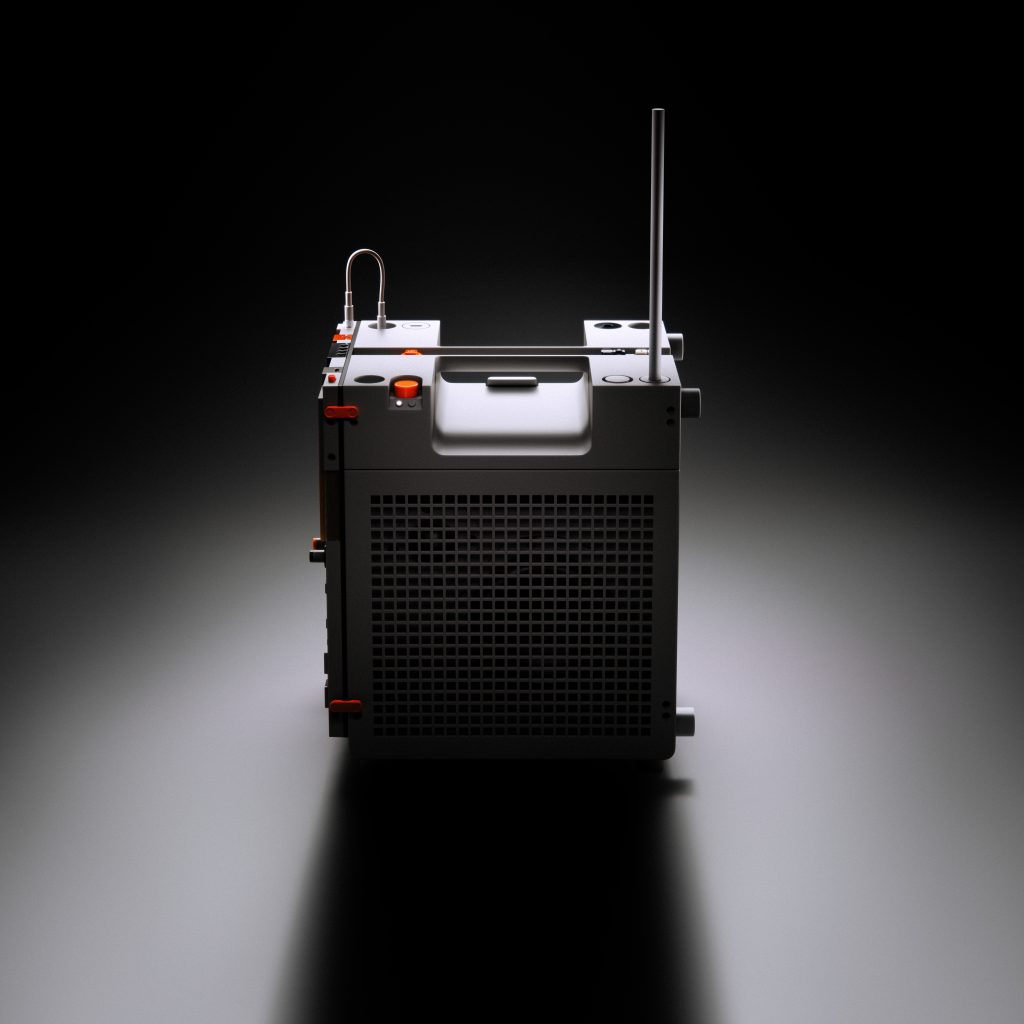
The EP-35 is also the new centre of the company’s EP series. Plugged into a computer, it works as an audio interface, sending a stereo mix plus separate channels for guitar, mic and line so you can record each source on its own track. A dedicated port hosts the EP-133 K.O. II and EP-136 K.O.-SIDEKICK samplers, a dock kit physically clips them onto the amp, and a line output lets you daisy-chain another unit or switch to headphones.
Alongside it arrives the EP-127 K.O. pedal, a wireless foot controller with two large pressure-sensitive buttons that also rock forward and back, so they do more than simply switch something on or off. It talks to the amp over Bluetooth and doubles as a MIDI controller for your computer.
Is it the most powerful amp you can buy for the money? No, and it is not trying to be. What makes the EP-35 interesting is the scene it imagines: a guitar, a mic, a friend with a phone full of songs and nowhere to plug in. Teenage Engineering has designed the box for exactly that moment, and then left room for the drinks.
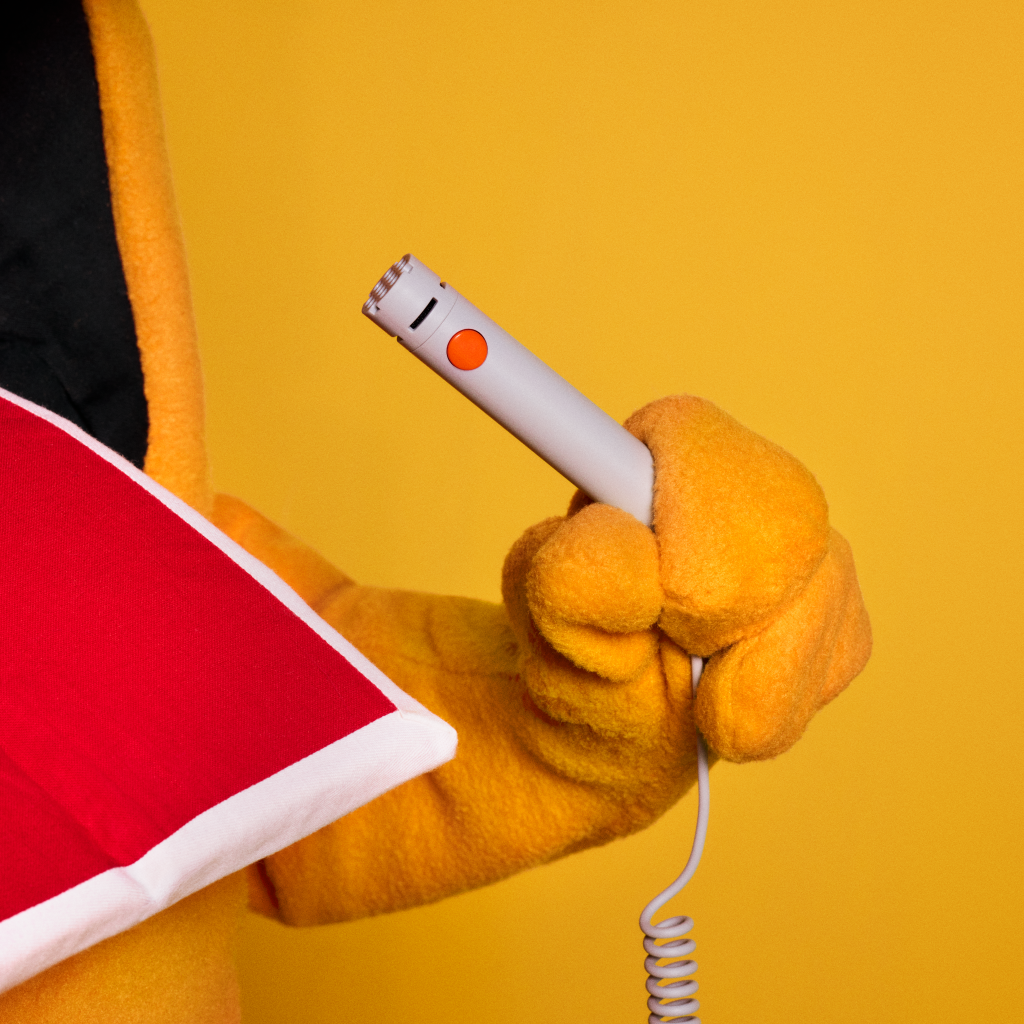
The EP-35 costs €399 and the EP-127 K.O. pedal €99, both available from teenage.engineering, together with accessories including a handheld mic, an FM radio antenna, a strap and a dock kit.



