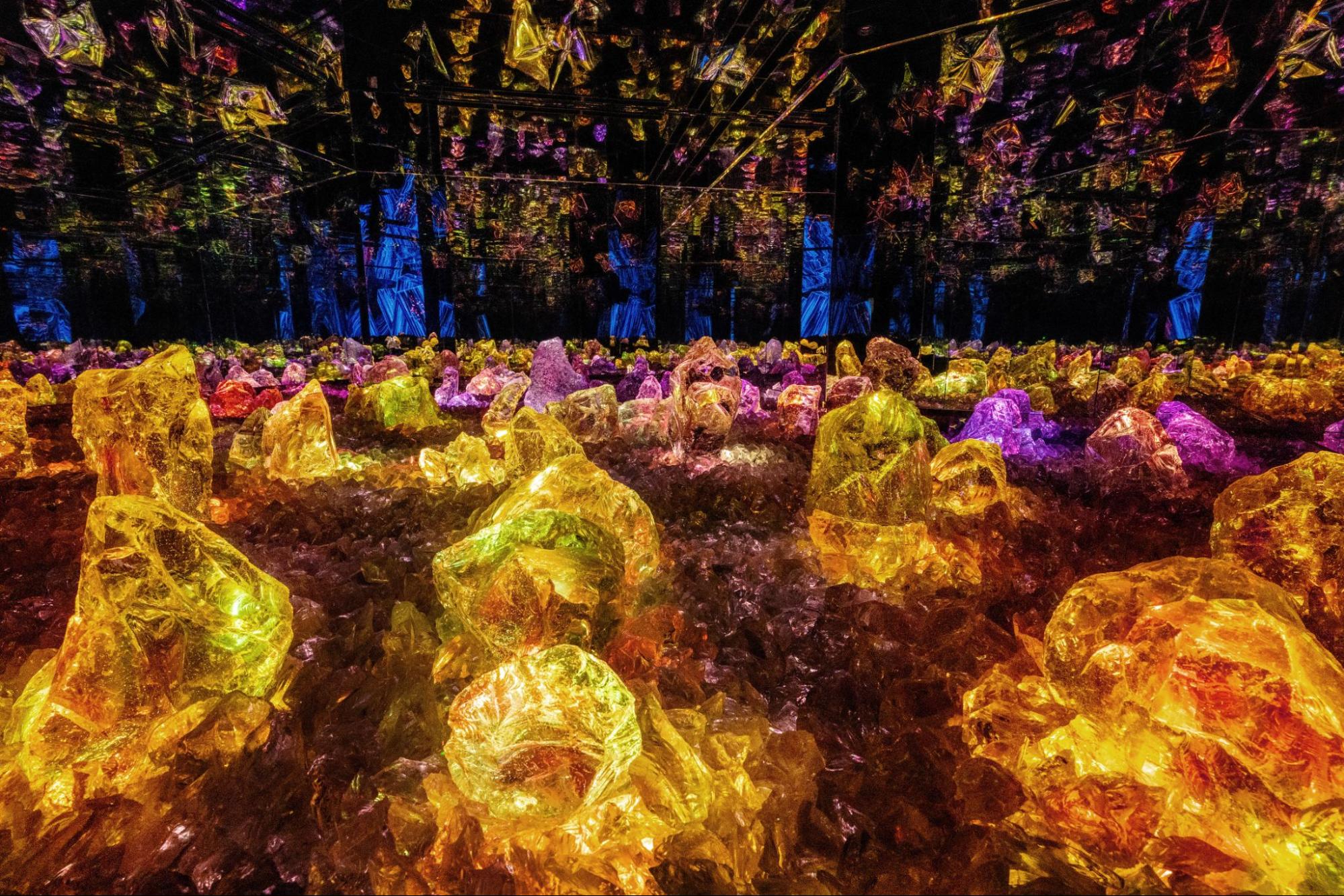
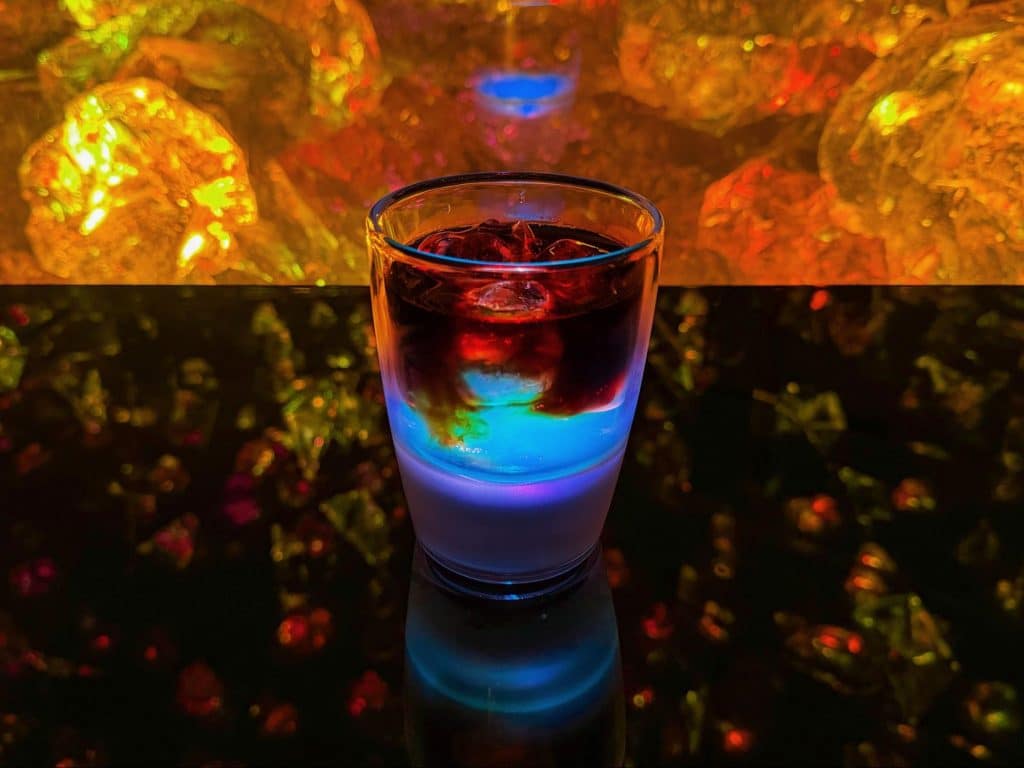
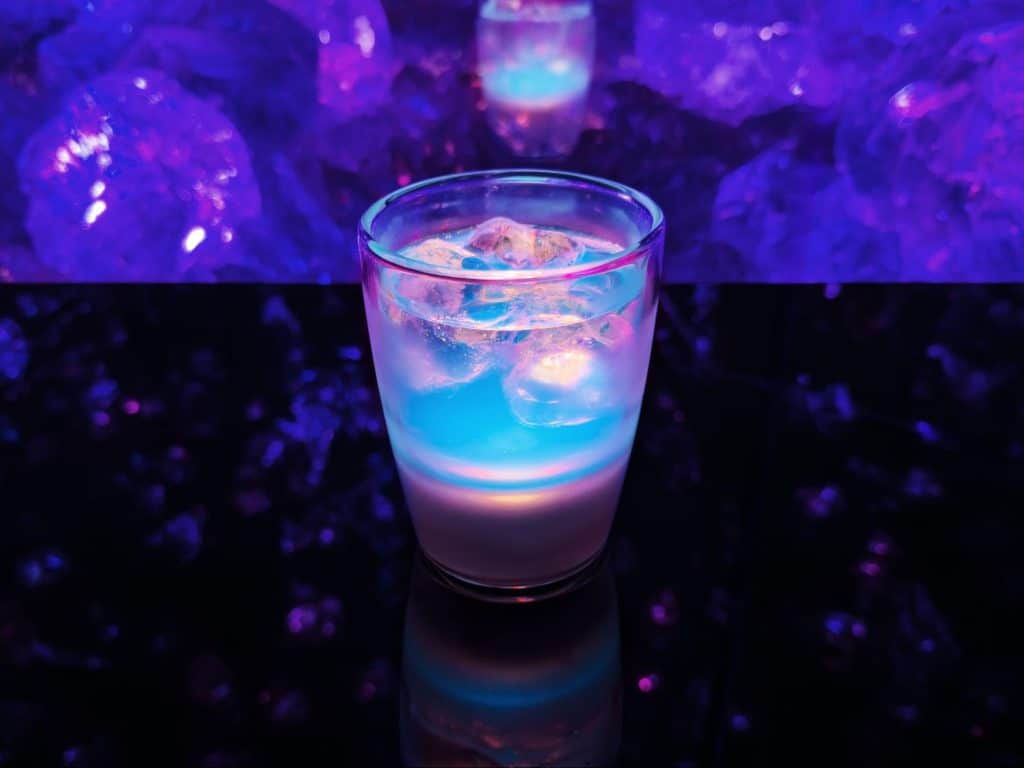
A glass of iced tea glowing from the inside: turquoise at the bottom, pink in the middle, a few ice cubes catching the light. Around it, a dark floor scattered with lumps of amber, gold and violet, like a beach after a very strange tide. This is the Teahouse in a Sea of Light, the newest room at teamLab Biovortex Kyoto, and from 20 November you can order a drink in it.
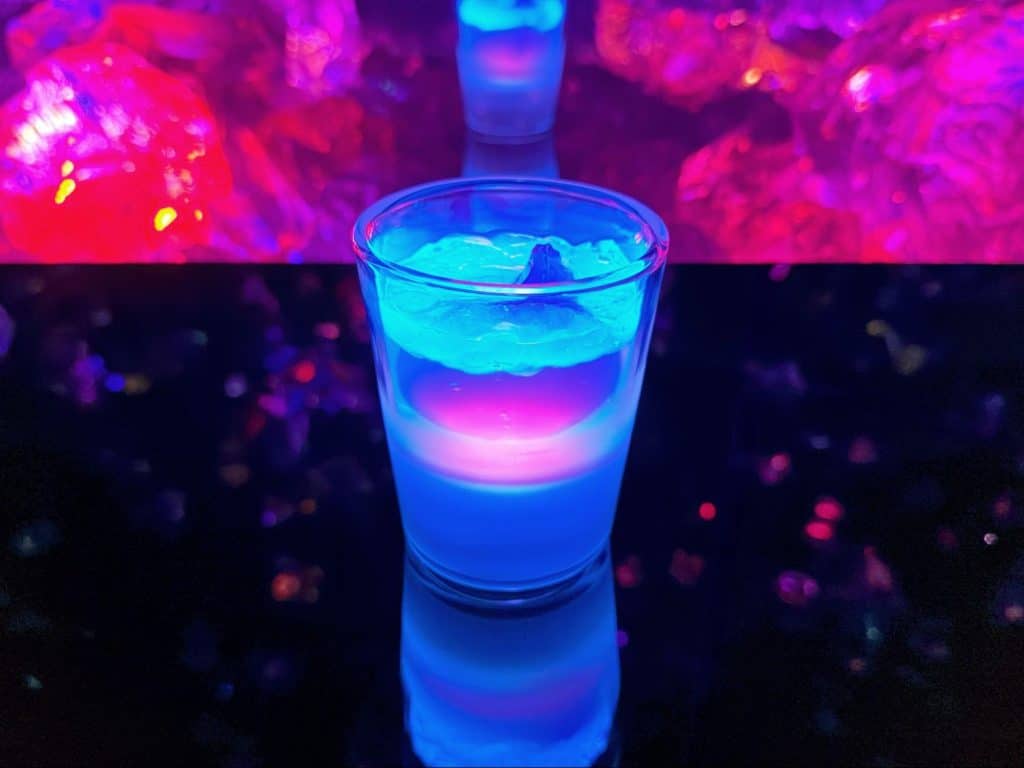
The idea is pure teamLab. When a tea is poured, the glass starts to glow with its own rhythm and plays its own tone. Each glass reacts to the ones around it and to the light in the room, so the whole space slowly settles into a kind of shared clock. The work is called Tea in Spontaneous Order, and the Tokyo collective has been developing it since 2021. In their words, visitors end up drinking part of that order. We prefer to think of it as the only tea that changes colour while you are still deciding whether you like it.
A teahouse inside a sea of solidified light
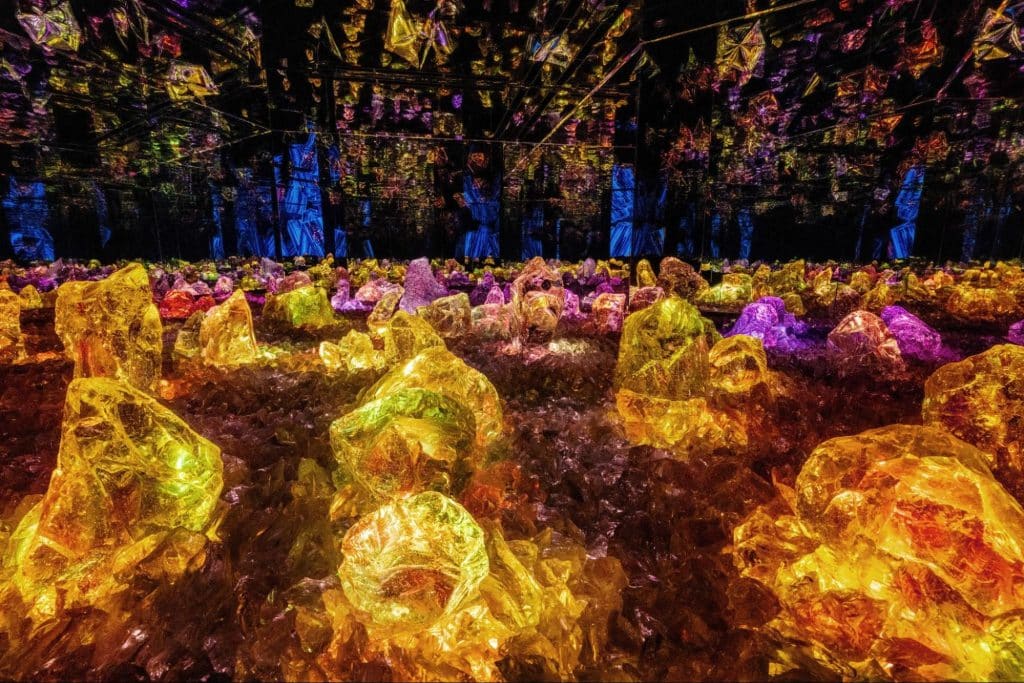
The setting is Sea of Solidified Light, one of the more than 50 works inside the museum: a dark room filled with translucent shapes that look like light that has cooled down and set. Put a teahouse in the middle of it and the drinks become part of the installation, glowing back at the room that lights them.
Tea is not a random choice in Kyoto, a city with centuries of tea culture behind every doorway, and teamLab has been leaning into its neighbours. Over the summer the museum shop started selling copper tea caddies made by Kaikado, the Kyoto workshop that has been making them by hand, with the same method, since 1875.
One year, 1.3 million visitors
Biovortex opened on 7 October 2025, a short walk from Kyoto Station: about 10,000 square metres and more than 50 works, teamLab’s largest museum in Japan. In its first year it welcomed more than 1.3 million visitors from 167 countries and regions. Around 44 percent came from abroad, and the average visit lasts over two and a half hours, which in a city of temples and gardens is quite a lot of time to spend indoors. Next door, Superblue Kyoto, a hands-on art centre, is planned for early 2027.
Immersive digital art has its critics, and some of them have a point: too many rooms built for selfies, not much left to look at once the phone is back in the pocket. teamLab usually escapes the category because its works respond to people and to time instead of playing a loop. A room that changes because someone ordered a drink is a good example of the difference, and a very Kyoto one.
The Teahouse in a Sea of Light opens on Friday 20 November 2026 at teamLab Biovortex Kyoto, open from 9:00 to 21:00 with last entry at 19:30. Tickets on teamlab.art.
Free newsletter, every Sunday
The Week on Feel
The best of the week in design, architecture and art, picked by our editors and delivered to your inbox.