SlashVibe gives your AI agents a desk of their own
A tiny always-on display and a detachable controller with a joystick: SlashVibe is hardware for working alongside AI agents, and its makers have just decided to open-source the whole software stack.
Feel Desain Editors
5 min read
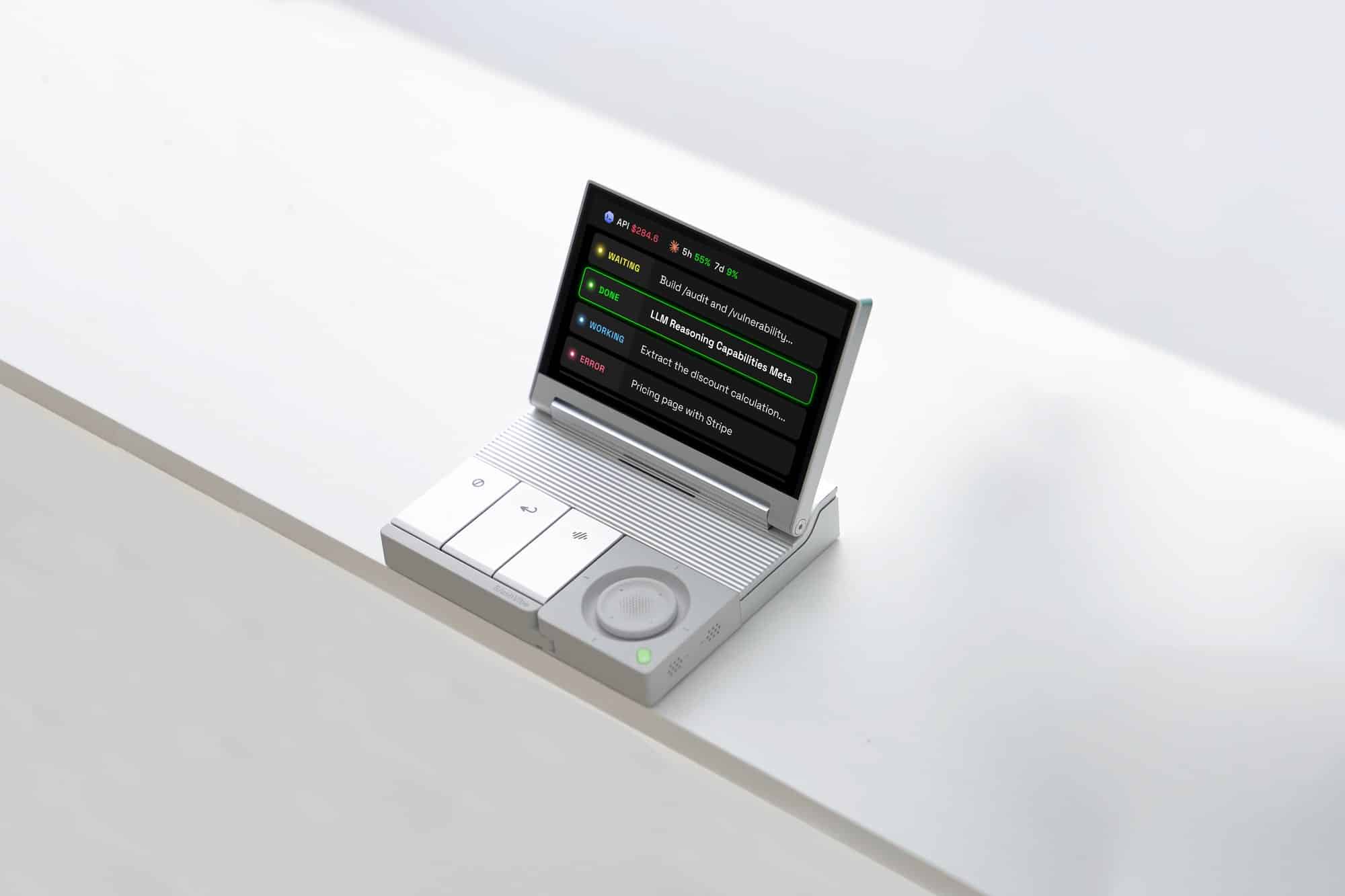
Our screens are full. Between the chat window, the code editor, the browser and the twelve tabs we keep promising to close, the AI agents doing work for us end up somewhere in the background, out of sight and out of mind. SlashVibe wants to bring them back onto the desk, where you can actually see them.
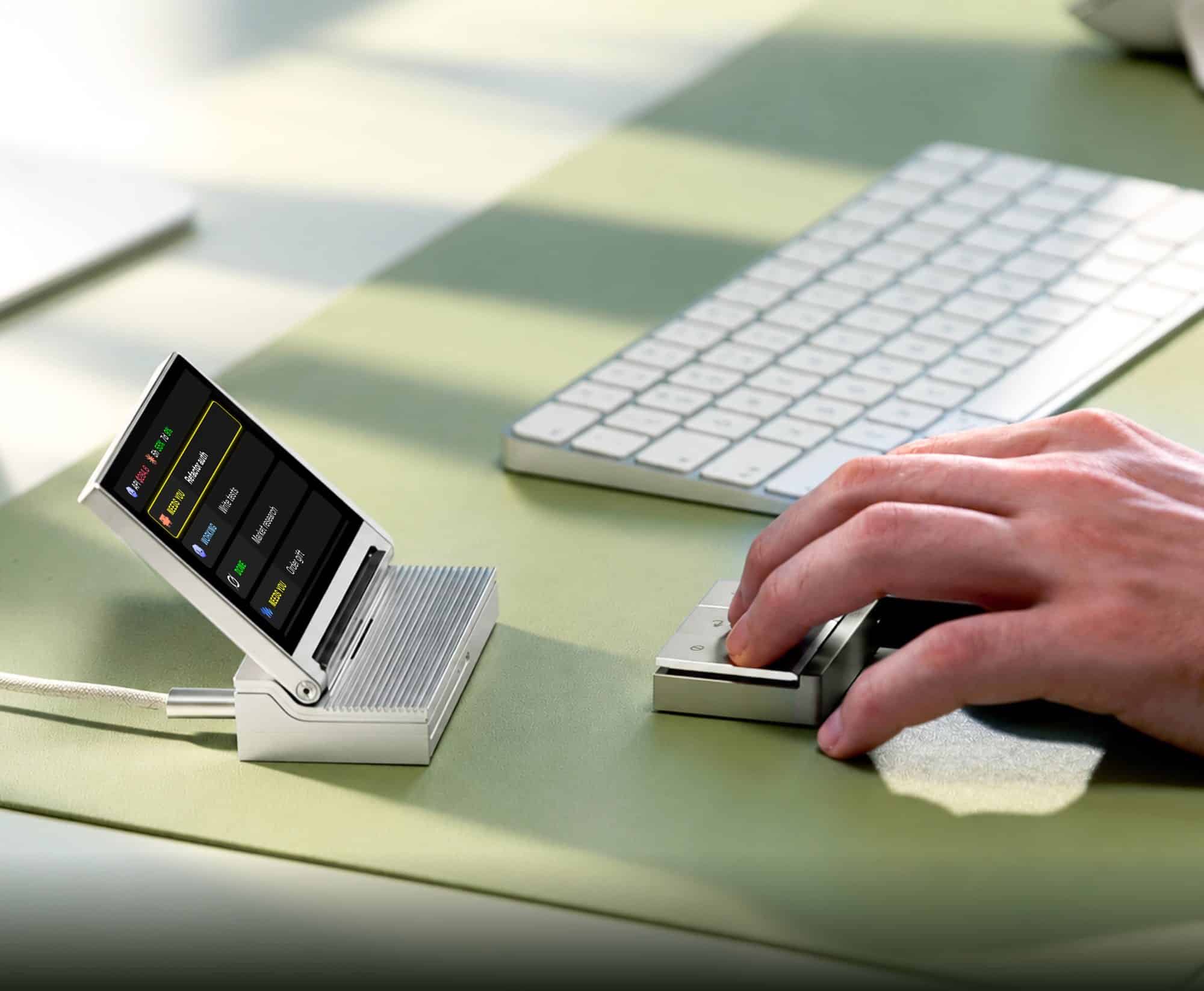
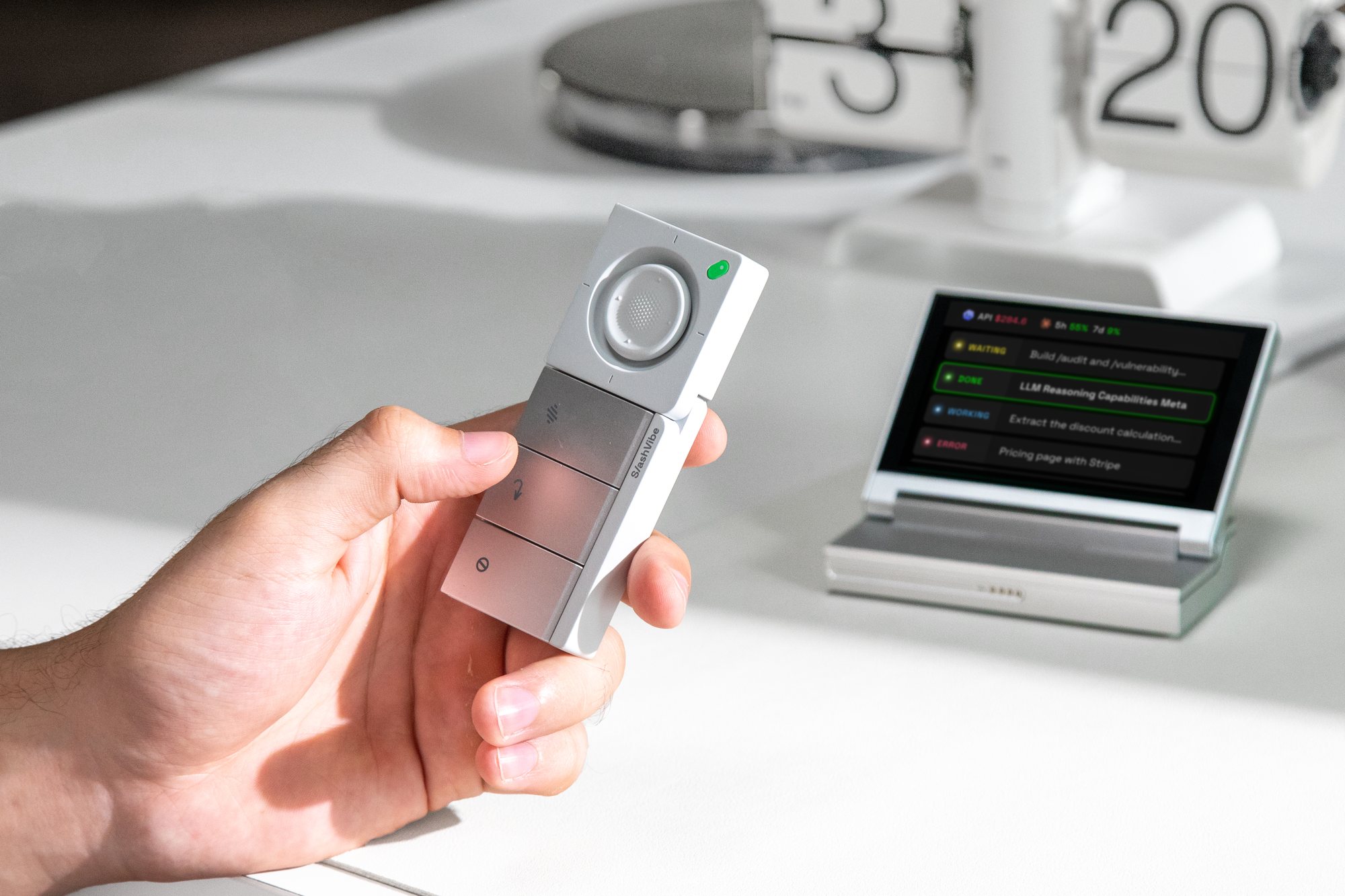
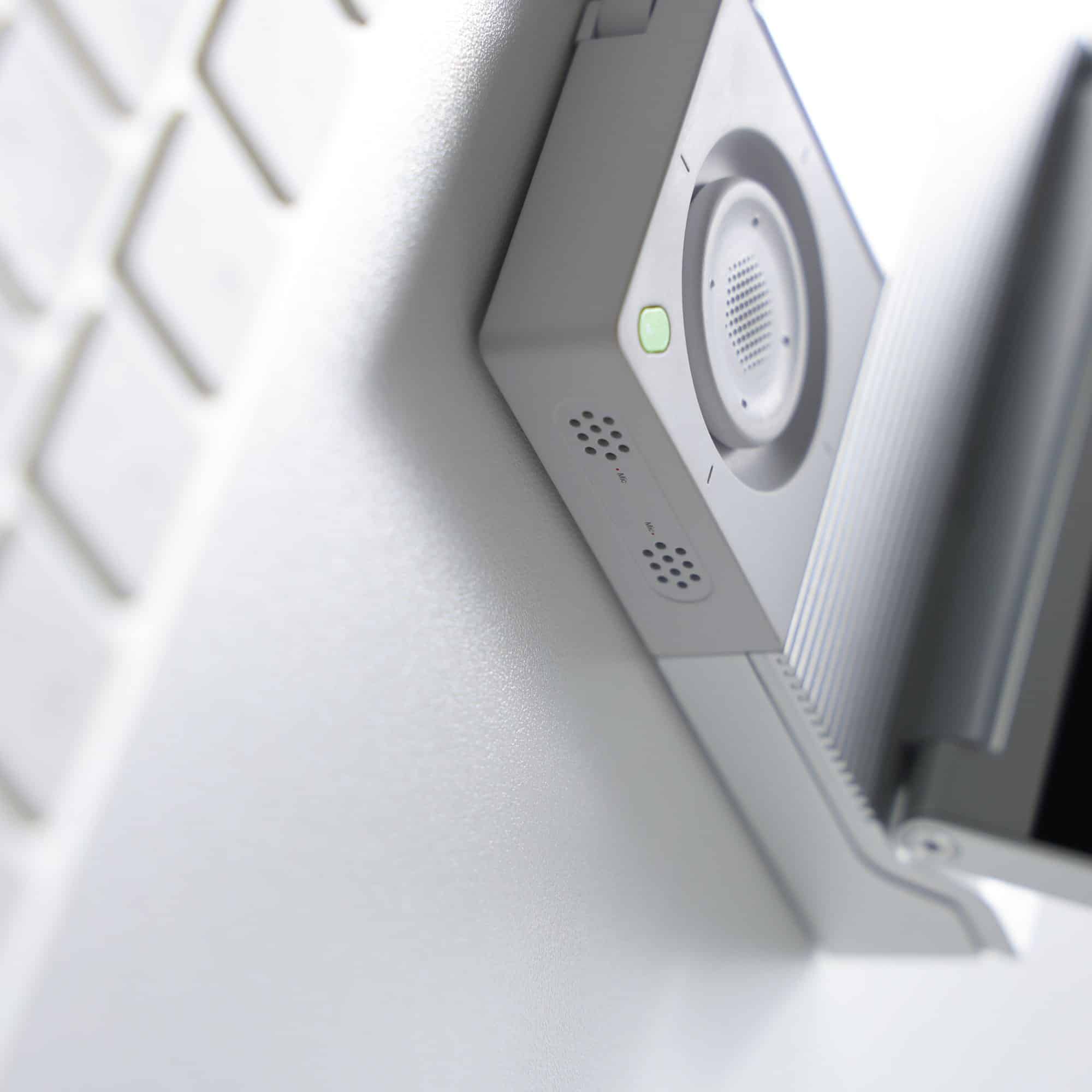
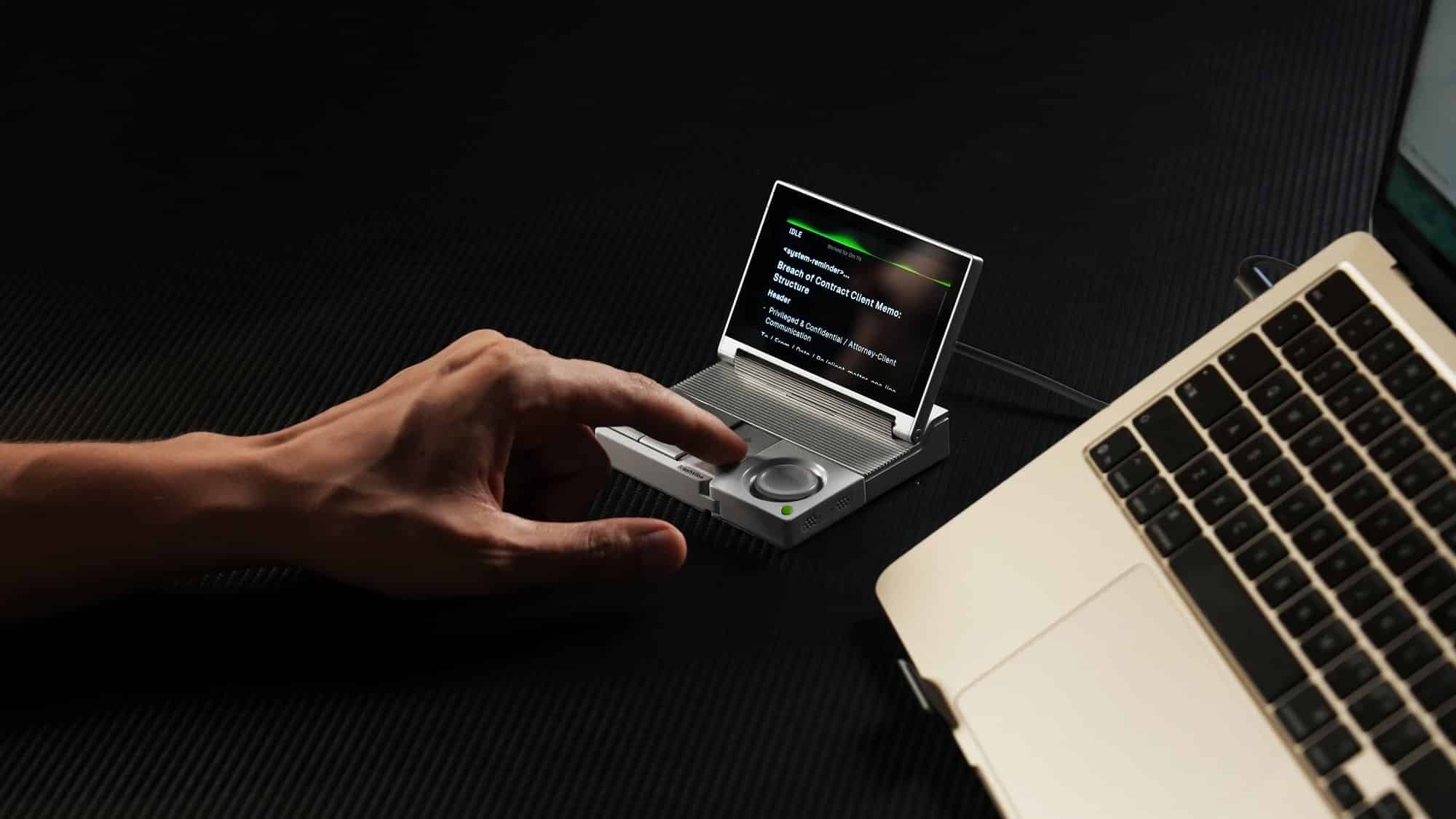
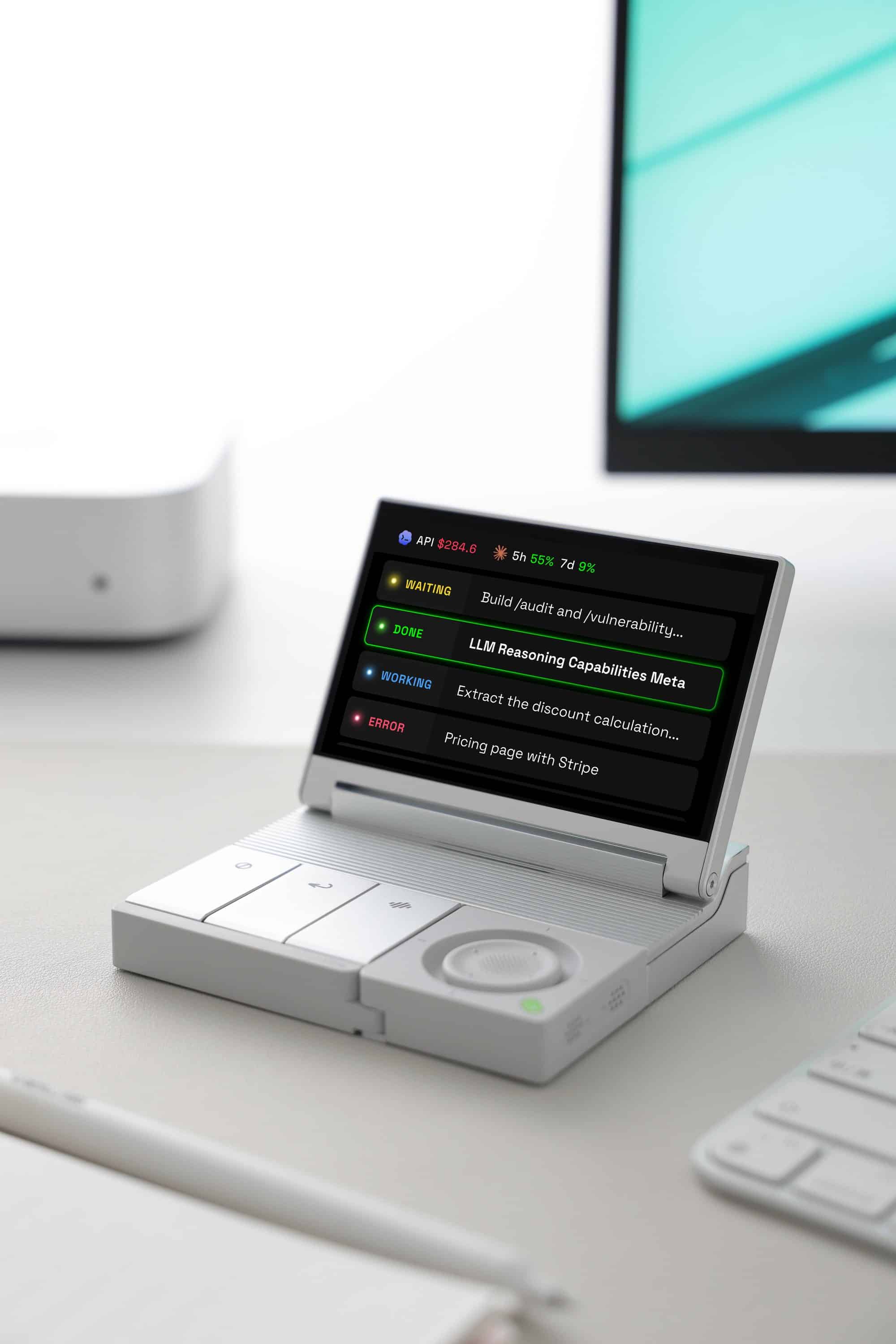
It comes in two parts. A small always-on display, 3.96 inches, sits next to your laptop and shows what your agents are up to. A detachable controller, with three mechanical buttons, a joystick, two microphones and a battery that lasts around 20 hours, can stay on the desk or travel to the sofa with you. It works with more than twenty agents and tools, from Claude Code and Codex to Cursor and Gemini CLI, on macOS and Windows, and so far it handles four jobs: agent monitoring, a to-do list, meeting assistance and voice input.
Courtesy of SlashVibe
Courtesy of SlashVibe
The project is on Kickstarter until 10 December, and the numbers suggest we are not the only ones tired of hunting for the right window: at the time of writing it has raised more than $120,000 against a $10,000 goal. We asked Loda Luo, co-founder of SlashVibe, three questions about the thinking behind it.
The idea started with a small betrayal. Loda’s previous startup made split keyboards, yet he found himself reaching for something much simpler.
You’d think that since I was making split keyboards, I’d be typing on one all day. But over time, I found myself preferring a tiny keypad with just three buttons. With that little separate keypad, I could lean all the way back in my ergonomic chair. Hardware isn’t always about what you can do. Sometimes it’s about how it feels to do it.
The team did try the obvious route first. “I actually built a software version when I first had this idea,” Loda says. An app that pops up while you are deep in something else, or right when you are taking a screenshot, turned out to be its own kind of noise. “When an interaction happens repeatedly throughout your day, even a tiny reduction in friction can make a meaningful difference.”
There is also the simple pleasure of a thing that clicks. SlashVibe uses one of Kailh’s newest ultra-low-profile mechanical switches, “extremely thin, but with enough key travel and tactile feedback to still feel satisfying,” and the team softened the joystick because most of the ones they tested felt built for camera gimbals rather than desks.
Courtesy of SlashVibe
No touchscreen, on purpose
The most interesting decision is a refusal. In a world of glass rectangles, SlashVibe has no touchscreen at all.
Touchscreens are great when you have a lot of different actions to choose from. Physical buttons are better suited to a smaller number of actions that you repeat many times throughout the day. Once you build up muscle memory, you can use those buttons without even looking at them.
Courtesy of SlashVibe
Behind it sits a bet on where AI is going. “As AI becomes more capable, most things people want to do will require fewer and fewer interactions,” Loda explains. Hence three buttons and a joystick as a consistent grammar for everything, plus a tiny green button to switch between functions.
Choosing that joystick took longer than choosing everything else. Knobs only make sense for volume. Trackpads disappointed in the hand, even when the team, whose other co-founder previously started a smart ring company, tried putting one on a ring. Scroll wheels only go up and down, and trackballs are loved by few and loved fiercely. Then came the problem of thickness: gaming joysticks were too tall for the slim body they wanted. The answer was a sliding joystick, customised for SlashVibe, a cousin of the one on the Nintendo 3DS. “Nintendo’s products have been a big inspiration for us throughout the entire design process,” Loda admits.
Courtesy of SlashVibe
A pirate flag and an open door
During the campaign, SlashVibe changed course and decided to open-source its whole software stack: the desktop app, the device firmware, the communication protocol and the SDK, in Node.js and Python. It is a surprising move for a team that, by its own admission, dreams of being the next Apple, and keeps an Apple-inspired pirate flag hanging in the office.
I first came up with the idea of agent monitoring in March, and by November it was no longer a particularly surprising feature. There’s no way a small startup like ours can explore and maintain all these possibilities on its own. Learning to put our ego aside is an important part of building the best experience.
Courtesy of SlashVibe
So SlashVibe is no longer just an agent controller, but something closer to an AI workspace, a small visible corner of the desk where the community can build its own apps, for work or just for fun. When the team finally sat down to decide, Loda says, it took them fifteen minutes.
We like objects that take a position, and this one takes several: buttons over glass, hands over menus, sharing over control. Whether three buttons and a joystick become the way we talk to our agents is anyone’s guess. We will tell you how it feels in the hand as soon as the first units ship.
SlashVibe Display with detachable controller for AI agents, macOS and Windows On Kickstarter until 10 December 2026 Early bird $189, expected retail price $249 First shipments expected in March 2027
As with any crowdfunding campaign, backing a project is not the same as buying a finished product: dates and specifications may still change.