A circle of sky, pale blue, floating in a field of acid green. Below it a thin dark horizon and a handful of tiny figures, standing very still. Nobody has painted anything here. The green is light, the blue is Denmark at sunrise, and the room in between is the largest Skyspace James Turrell has ever built inside a museum.
As Seen Below, The Dome opened in June at ARoS in Aarhus. It is 16 metres high and 40 metres across, roughly the size of the Pantheon in Rome, a comparison the museum is happy to make and one that holds up once you are inside: a dome, a single round opening at the top and the sky doing all the work. It is also Turrell’s 100th Skyspace, the kind of number an artist only reaches after more than fifty years of looking up.
Down before you go up
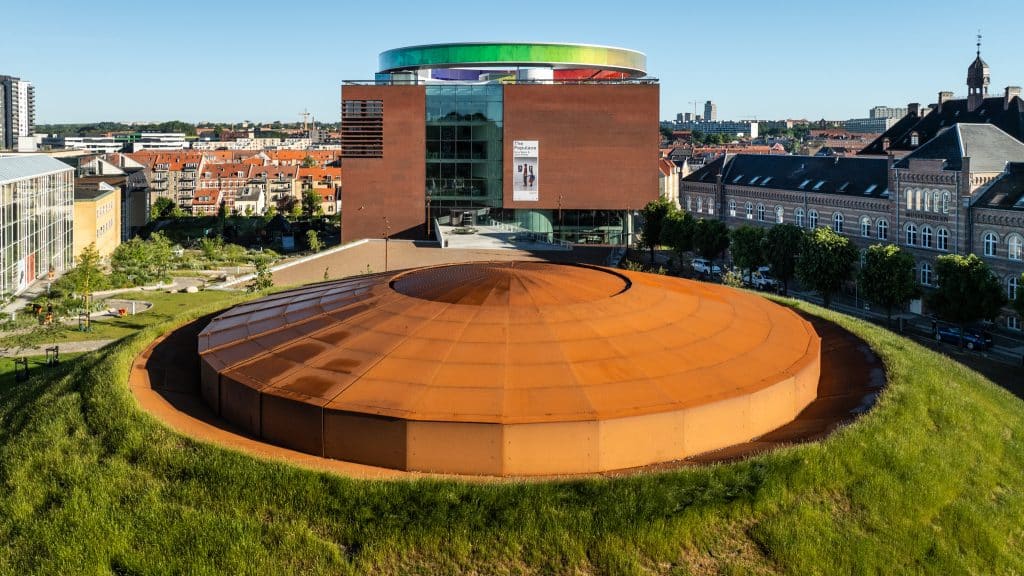
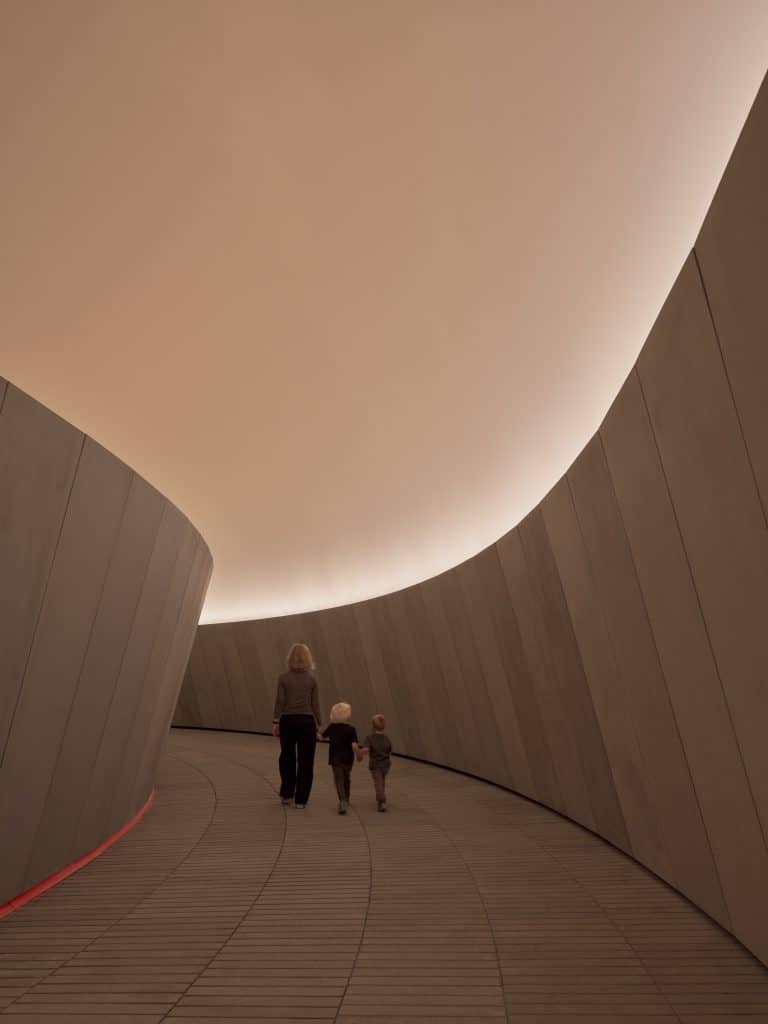
You do not walk into it, you walk under it. Visitors reach the dome through an underground corridor, and the first sign of what is coming is a pale disc of light at the end of the tunnel. Outside, the work barely announces itself: a low cap ringed with grass beside the museum, which the architects, Schmidt Hammer Lassen, compare to the burial mounds of Nordic kings. Inside it is concrete, granite and very carefully placed light, built with such precision that the walls seem to dissolve.
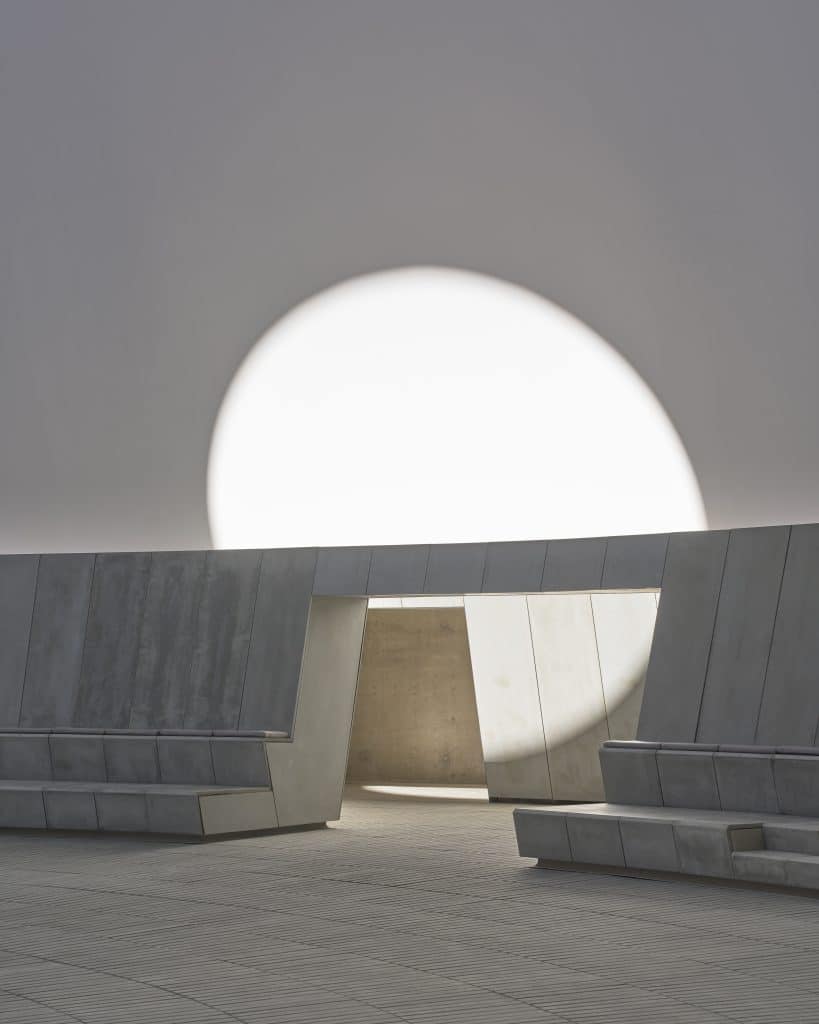
“The architecture brings the sky close, so you realise that the very act of seeing is the artwork itself,” says Turrell. It sounds like a statement for a catalogue. Standing under a 40-metre dome with nothing to look at but a disc of weather, it sounds like a description.
Three ways to see the sky
The work runs in three modes. In Open Sky the aperture is open and the sky turns into a flat field of colour, with no trees, rooftops or horizon to tell you how far away it is. In Colour Shift the opening is sealed and the room itself becomes the subject, its walls disappearing into slow changes of light. And in Twilight, at sunrise and sunset, Turrell’s lights shift in step with the real sky, which seems to change colour along with them. “I can change the sky to any colour you want,” he says, and judging by the photographs, he is not exaggerating.
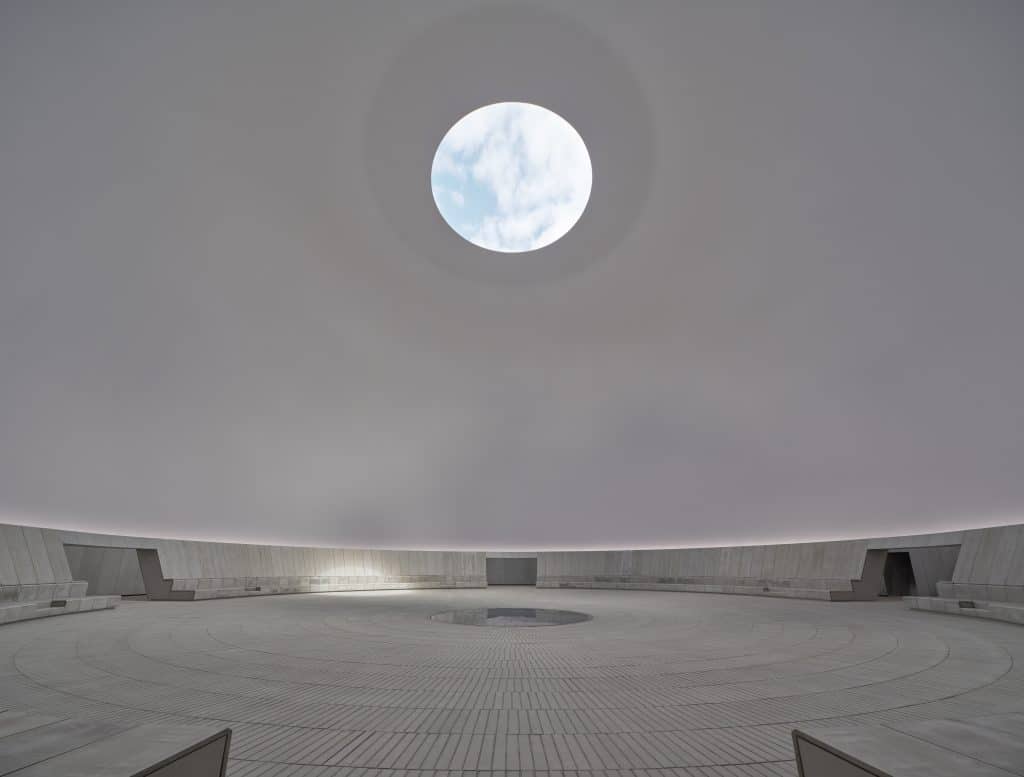
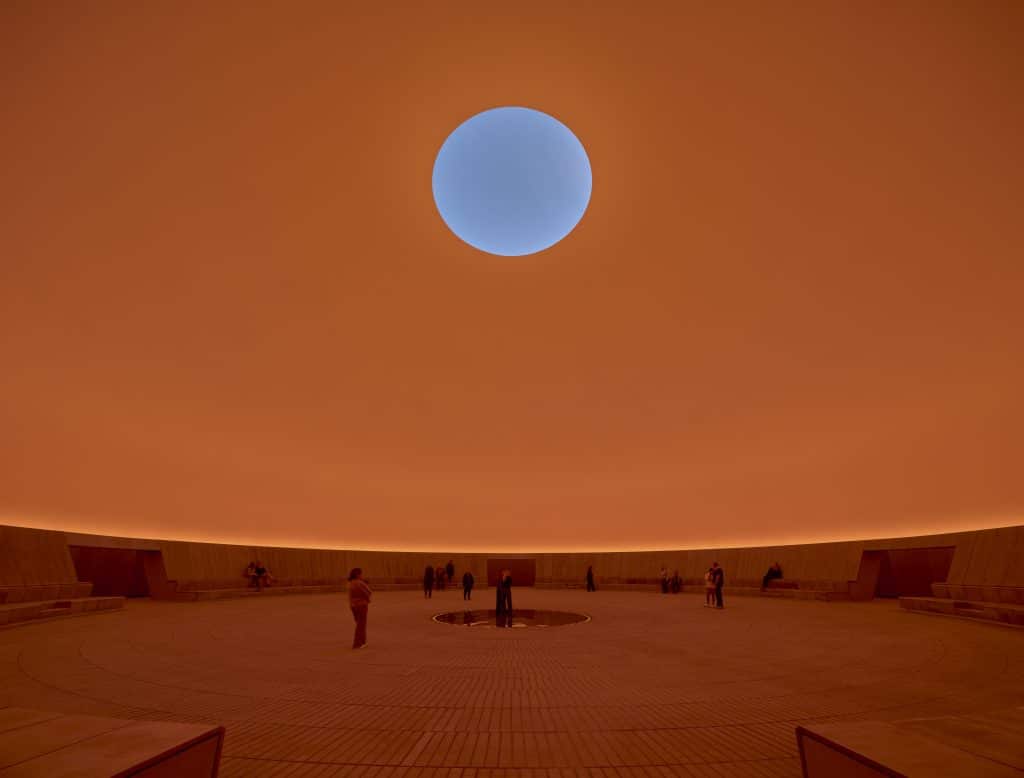
Sound plays its part too. The curved wall works like a whispering gallery, which nudges visitors into the hushed behaviour of a cathedral without anyone having to ask. On Sundays in November and December, the Twilight sessions at sunset come with Liminality, a choral piece by Kh Marie Studio built from lullabies sent in by people in Aarhus and performed by Ensemble Edge.
A rainbow on top, the sky underneath
ARoS already had one of the most photographed museum roofs in Europe, Olafur Eliasson’s Your rainbow panorama, the circular walkway of coloured glass that has been turning Aarhus into a city seen through a filter since 2011. As Seen Below completes The Next Level, a ten-year expansion that also added an underground gallery and an outdoor art square. Rainbow on the roof, sky in the basement: it is hard to think of another museum that has organised itself so literally around looking up.
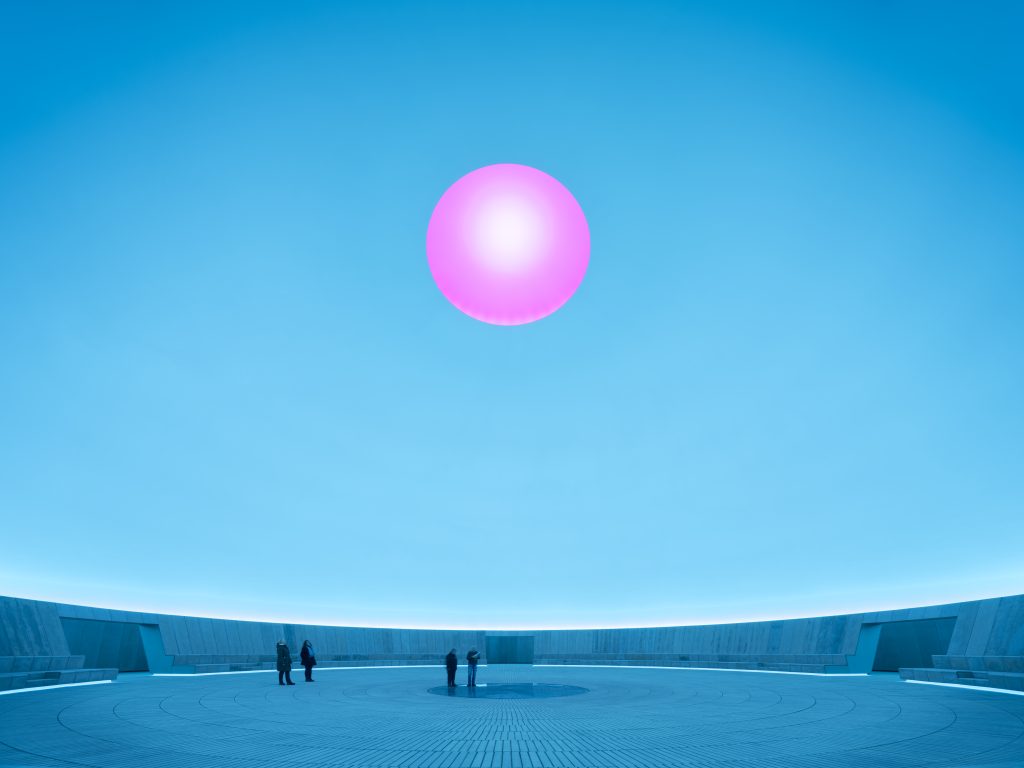
Turrell grew up in a Quaker family and has spent his career building rooms for silence. This is the biggest one yet, and the most generous. We would put it more simply: it is a very good reason to go to Aarhus, and to stay until sunset.
As Seen Below is included in the ARoS admission ticket. Twilight sessions at sunrise and sunset must be booked in advance on aros.dk.