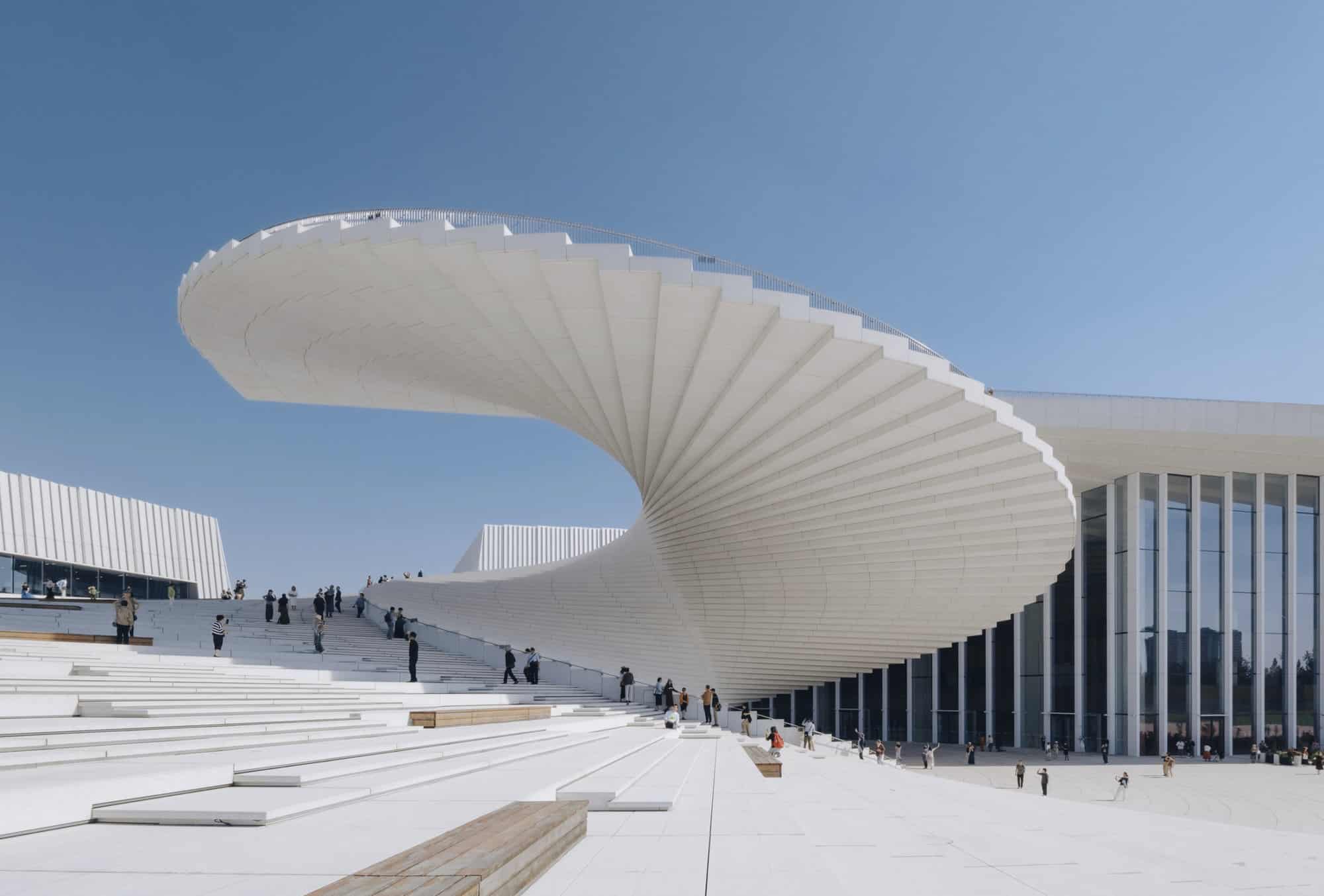
A white roof rises from the riverbank and starts to turn, like a folding fan being flicked open or the hem of a dancer’s skirt caught mid spin, and keeps turning until it becomes a staircase climbing into the sky. People walk up it in trainers, phones in hand, while the Shanghai skyline grows behind them. None of them needs a ticket.
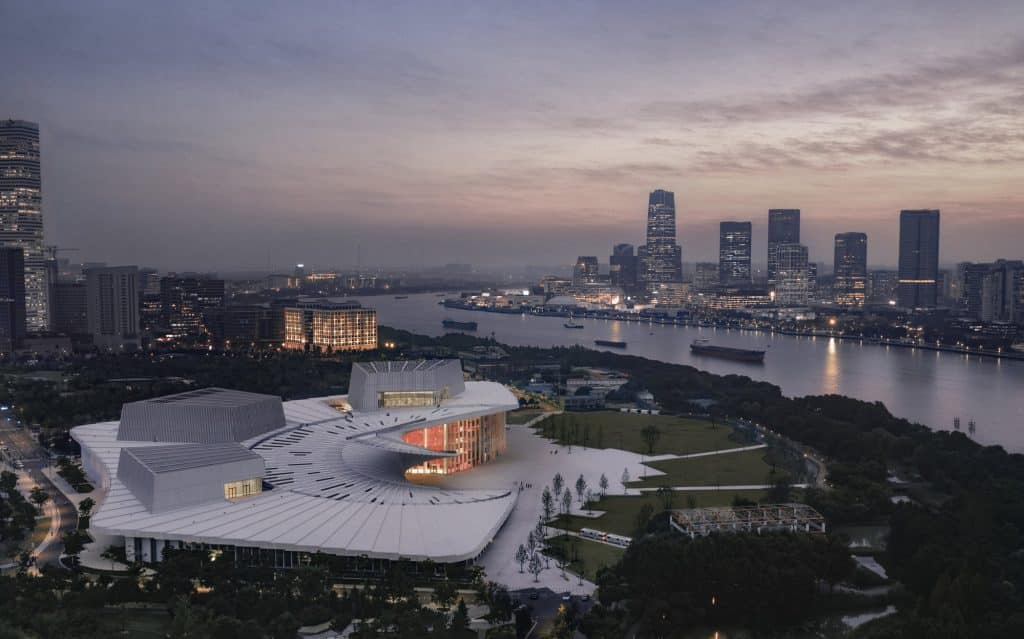
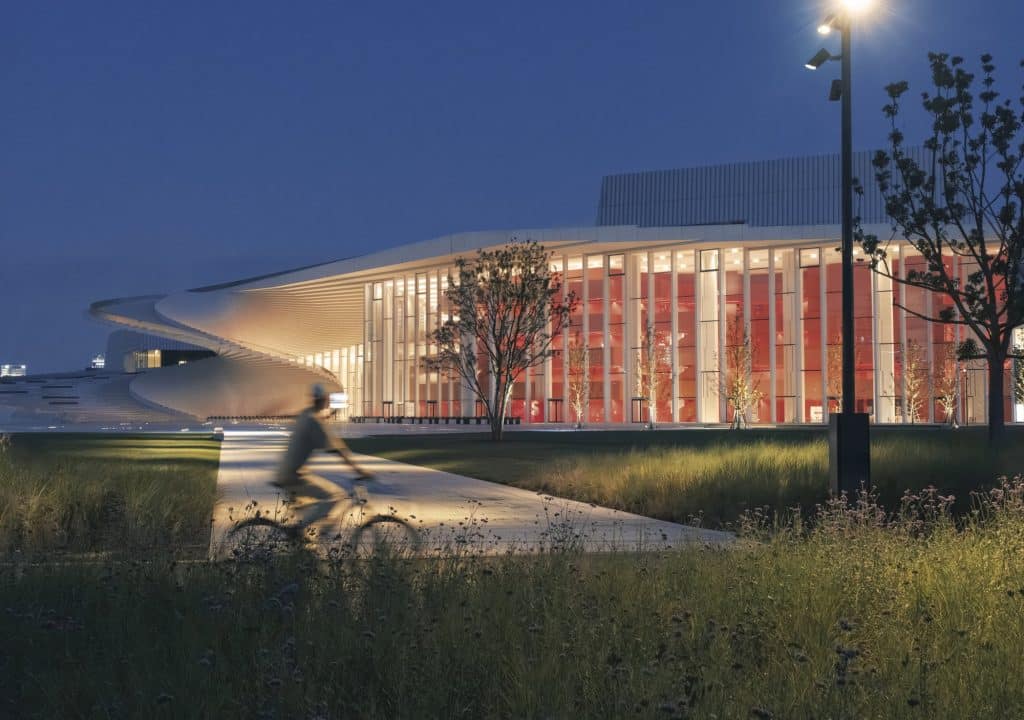
This is the Shanghai Grand Opera House, which opened on 17 October on the banks of the Huangpu River, in the Expo Houtan district. Snøhetta won the international competition back in 2016 and was commissioned in 2019 together with the East China Architectural Design & Research Institute (ECADI), theatre consultants Theatre Projects and Nagata Acoustics. Ten years later the result covers 146,786 m², with three auditoriums and 4,200 seats. The inaugural season, titled Born to Sing, runs until February 2027 with 82 performances across 47 productions.
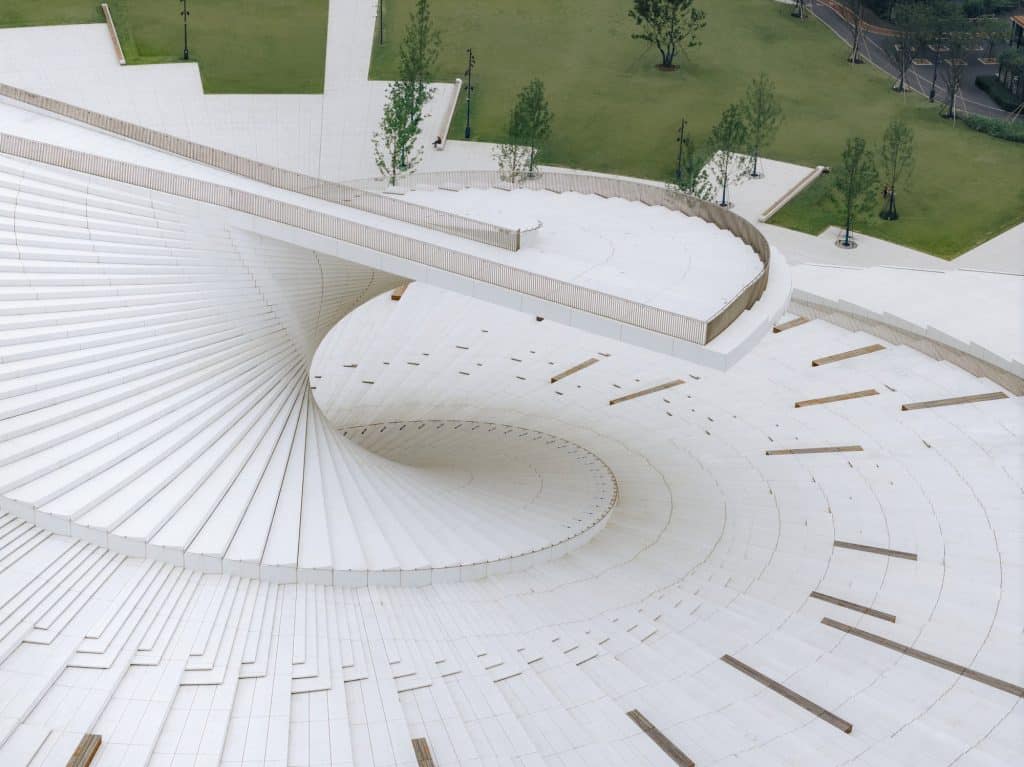
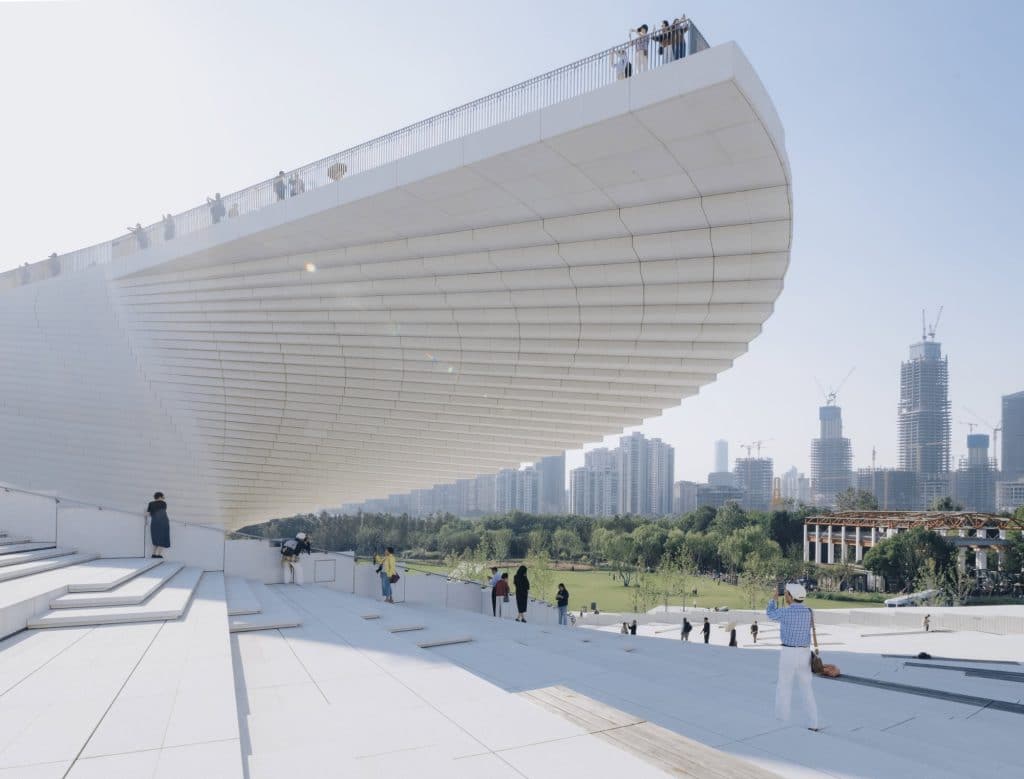
The roof is the whole idea. It is a single helical gesture that gathers auditoriums, restaurants, exhibition spaces and education rooms under one sweep, and it cantilevers up to 32 metres at its most daring point. Its spiral staircase links the ground to a rooftop deck facing the river and the skyline, and Snøhetta wants the roof to work as a stage, a viewpoint and a meeting place all year round, whether or not a performance is on.
Opera houses have long been machines for sorting people: boxes, galleries, dress codes and a front door that stays shut until curtain up. Snøhetta tried the opposite in 2008 in Oslo, where the white roof of the Norwegian National Opera slopes gently into the fjord and people stroll across it on a Sunday afternoon. Shanghai is the same idea with the volume turned up. Oslo slides; Shanghai spins.
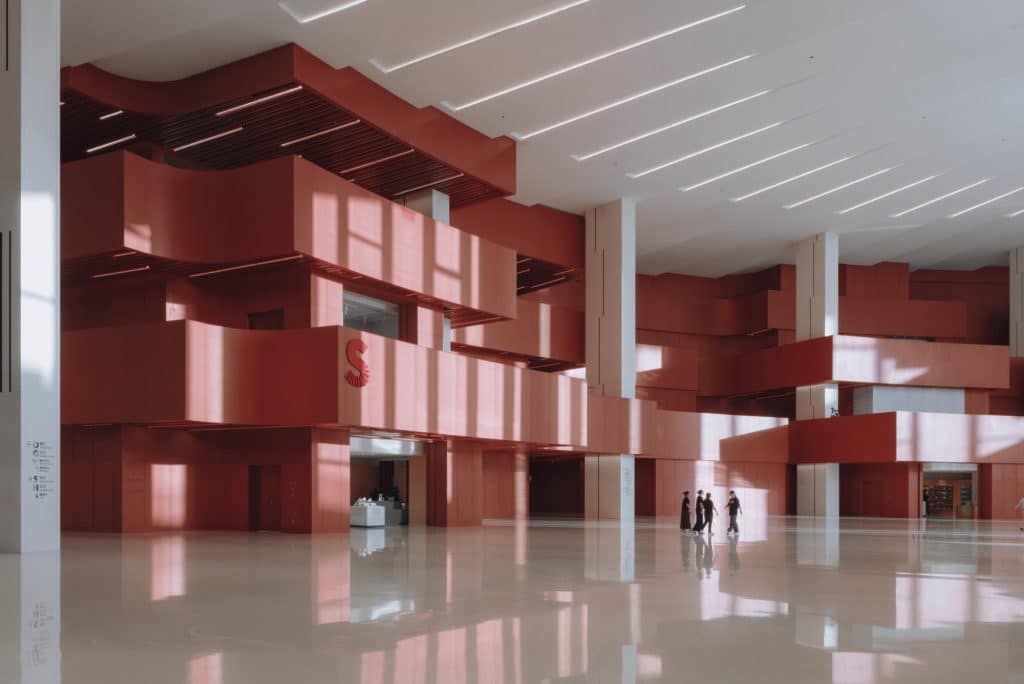
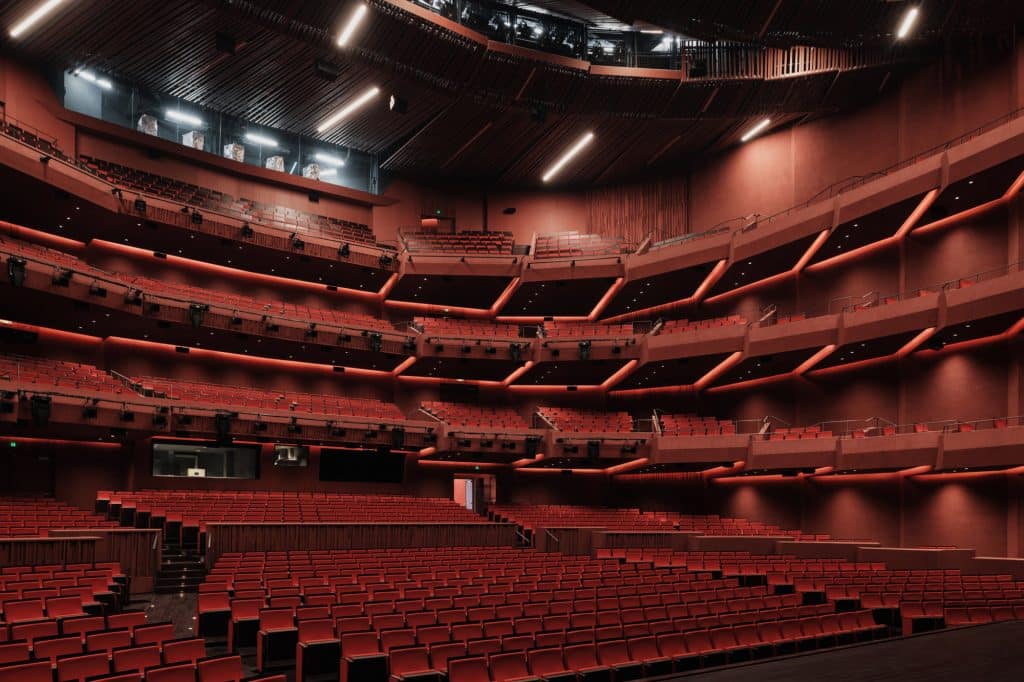
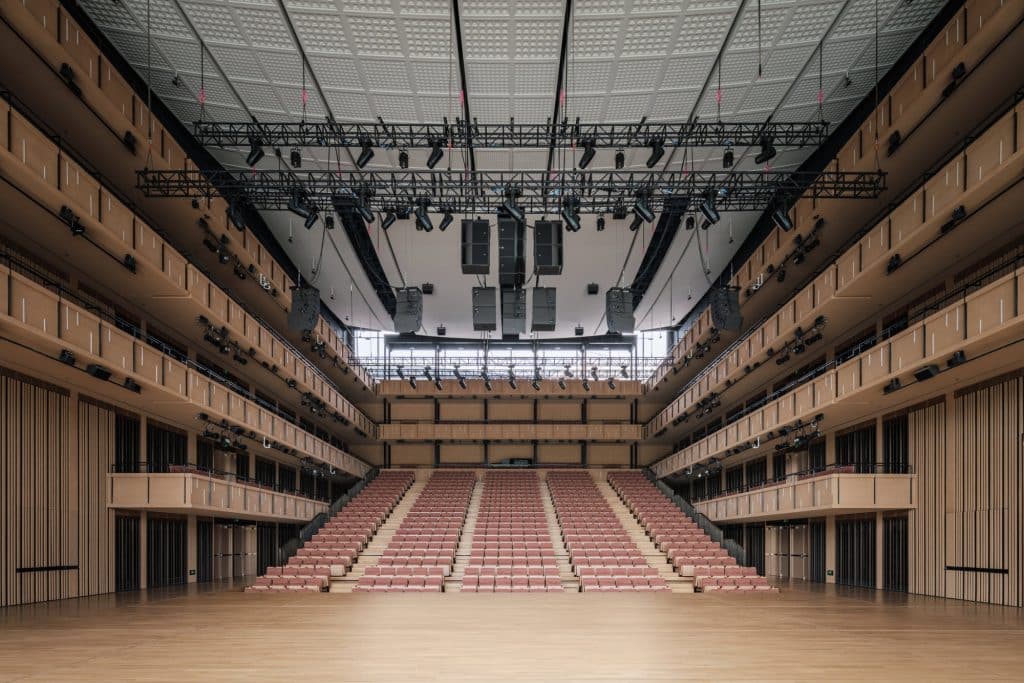
Inside, the white turns red. The foyer is punctuated by stacked red volumes, and the 2,000 seat Harmony Hall is conceived as a single block carved out and stained in deep red, spread over five levels with side boxes that bring the audience closer to the stage. Its surfaces were shaped around the human voice, because in opera the architecture is also an instrument. The 1,200 seat Soar Theatre is made for baroque and classical opera, operetta and theatre, while the 1,000 seat Open Stage changes configuration for experimental work and looks out onto the park. The palette shifts from darker to lighter tones from one hall to the next.
The 32 metre cantilever is impressive engineering, but the number that matters most here is another one: zero, the price of standing on top of an opera house and watching the sun go down over Shanghai.