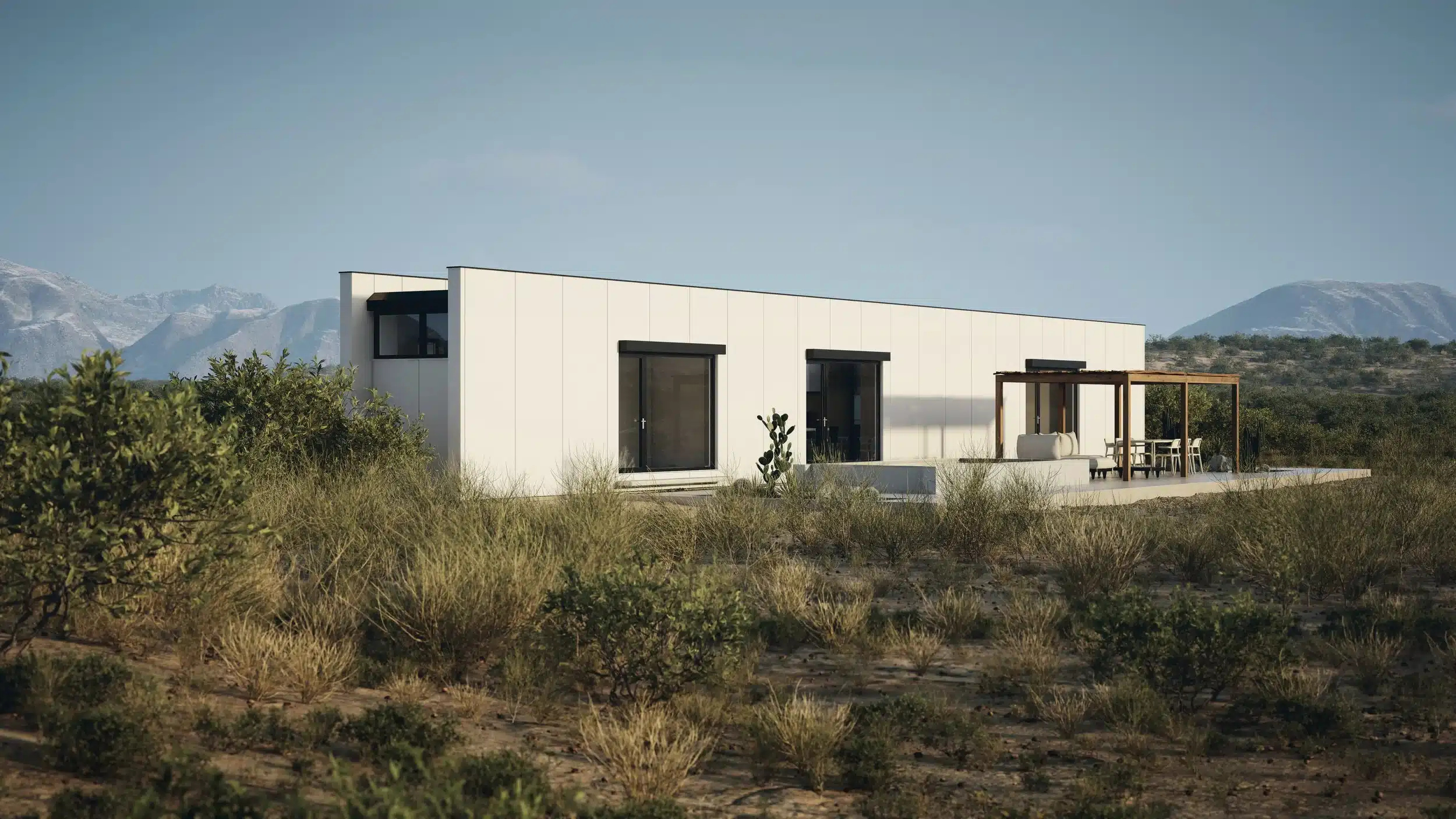
A long white volume lies low in the scrub, cut by black window frames, with mountains behind it and a patio pushed out into the dust like a jetty. From above it looks like a matchbox someone forgot in the desert. From the terrace, it is very much a house.
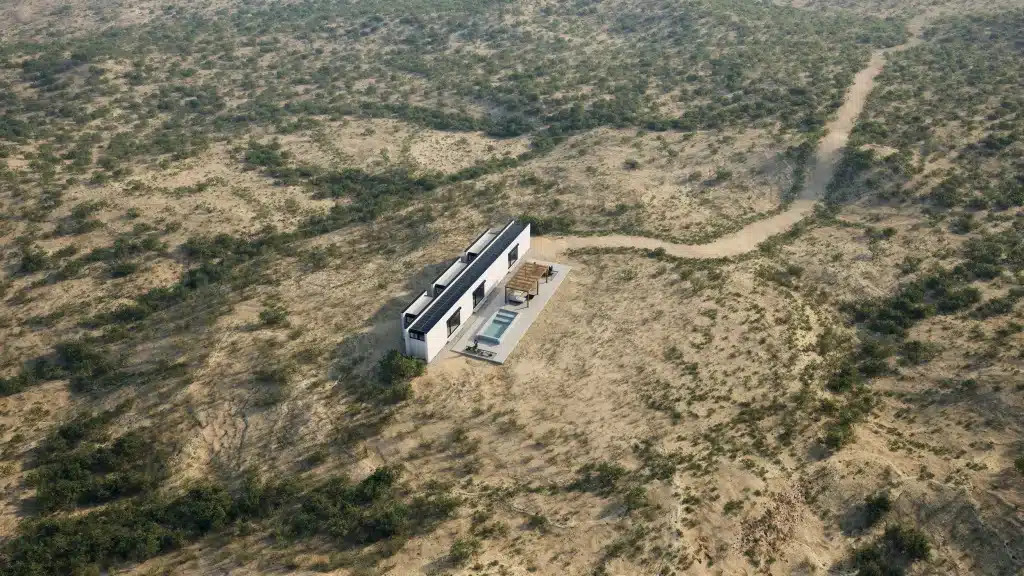
This is Monocabin XL5, a 92 m² home in the Californian desert outside Los Angeles, completed in 2024 by Monocabin, the Milan prefab company created by the team at Mandalaki design studio. Like every model in the range, it was designed and built in Italy and delivered as finished modules. XL5 joins two L modules and one M module into a single elongated plan: two bedrooms, two bathrooms, a generous kitchen and a big living room for four or five people.
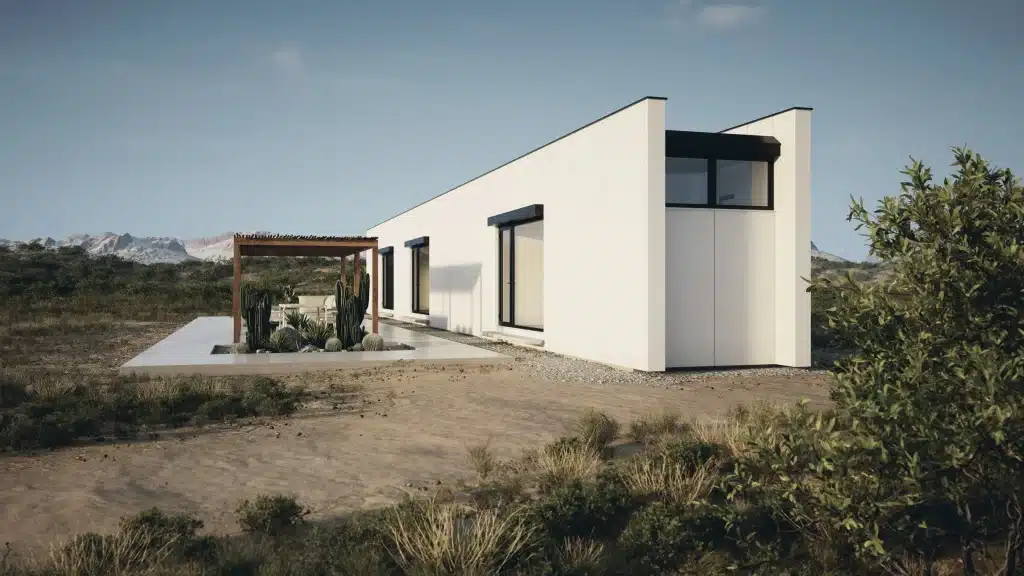
The house is completely off the grid. Solar panels supply the power, an underground cistern stores the water and a septic tank deals with the waste. Out here, where bringing utilities to a remote plot is rarely simple, self-sufficiency is less a green gesture than plain common sense, and XL5 wears it lightly. There is no showy tech on display, just a roof doing its job.
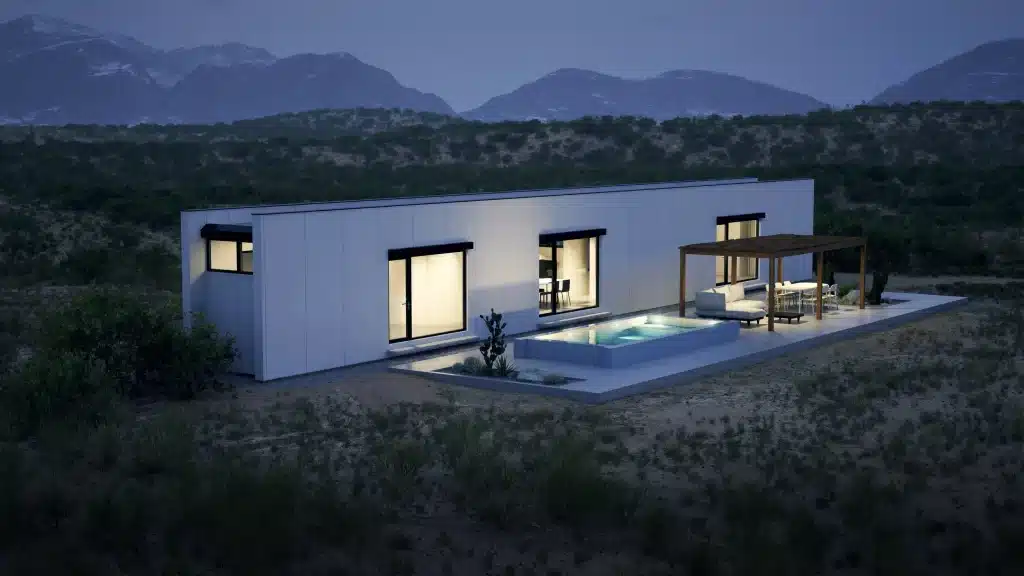
The real story is the system behind it. Monocabin works as a family of six sizes, from the 20 m² Lounge to the 92 m² XL5, all built on patented panels that combine structure, insulation and acoustics in a single element. Each home takes about three months to build in the factory and about a week to assemble on site. The company also says its interior system makes even the smallest units feel complete without sofa beds, fold-down tables or other transformer furniture. We like that promise: the tiny house movement has spent a decade making us climb ladders to get to bed.
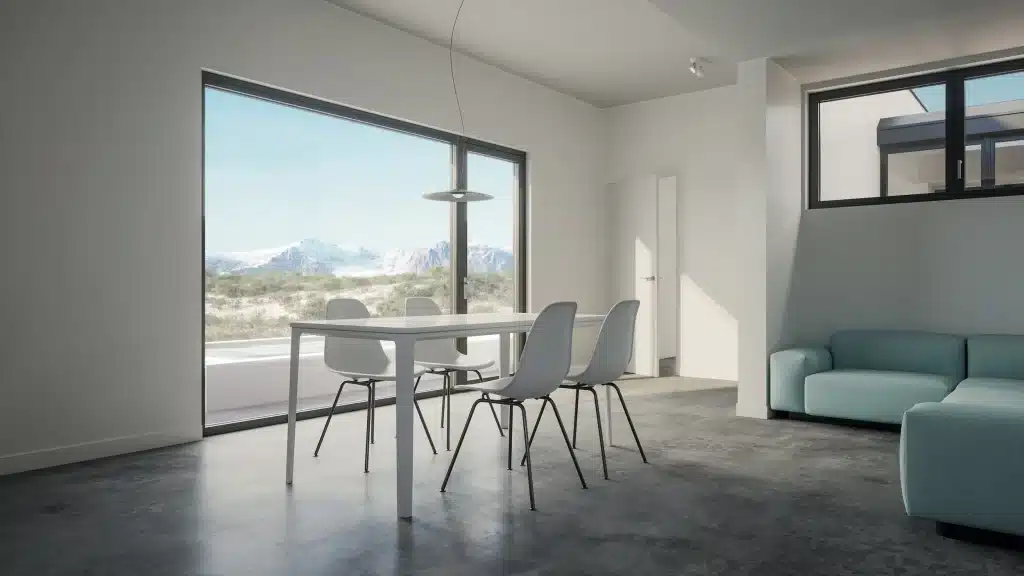
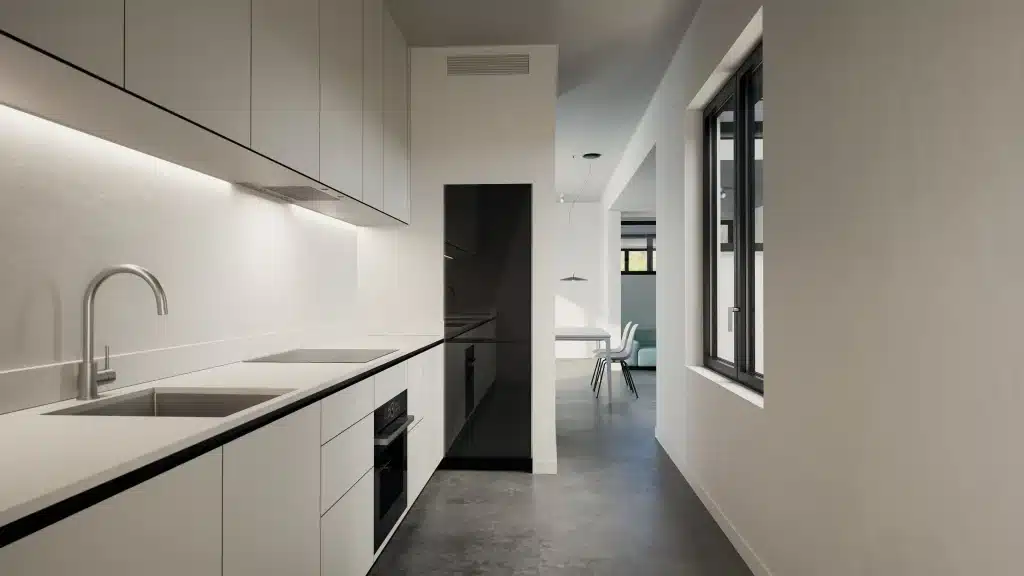
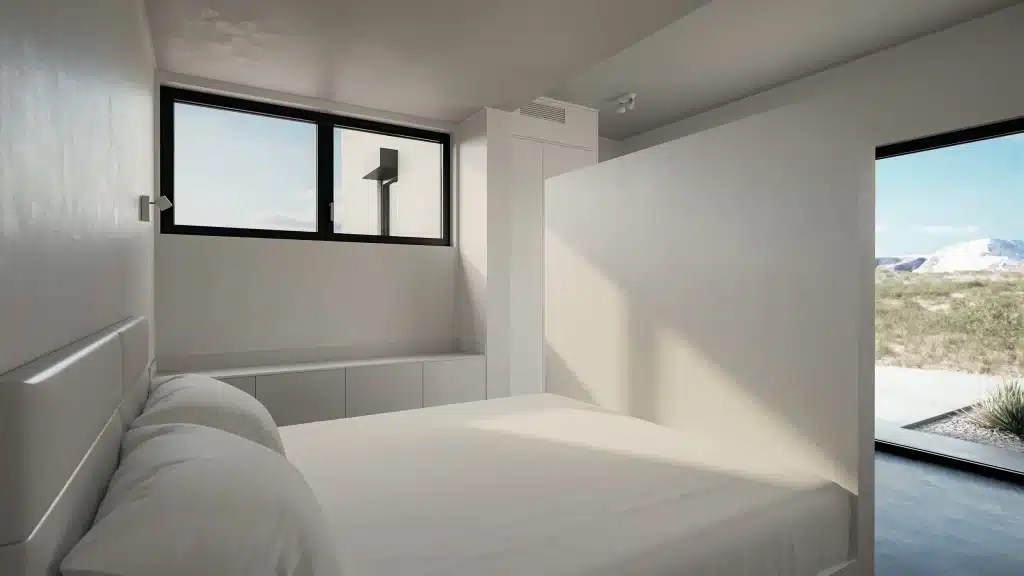
Prefab has a long record of good intentions, from Jean Prouvé’s demountable houses to the Case Study Houses that made Los Angeles a laboratory of modern living after the war. Its problem has rarely been technology. It has been that prefabricated houses tend to look prefabricated. XL5 avoids the trap through restraint: one material, few and carefully placed openings, and a long horizontal line that lets the landscape do the talking. Inside, white walls and grey floors keep things quiet, and the big windows do the decorating.
Other Monocabins stand in Rhodes, Padova and Piacenza, which says a lot about the system: the same modules can settle on a Greek hillside, in a Veneto garden or in the American desert. Italy has exported plenty of chairs and lamps. Shipping whole houses, ready to move into a week after they arrive, is a bolder move.