


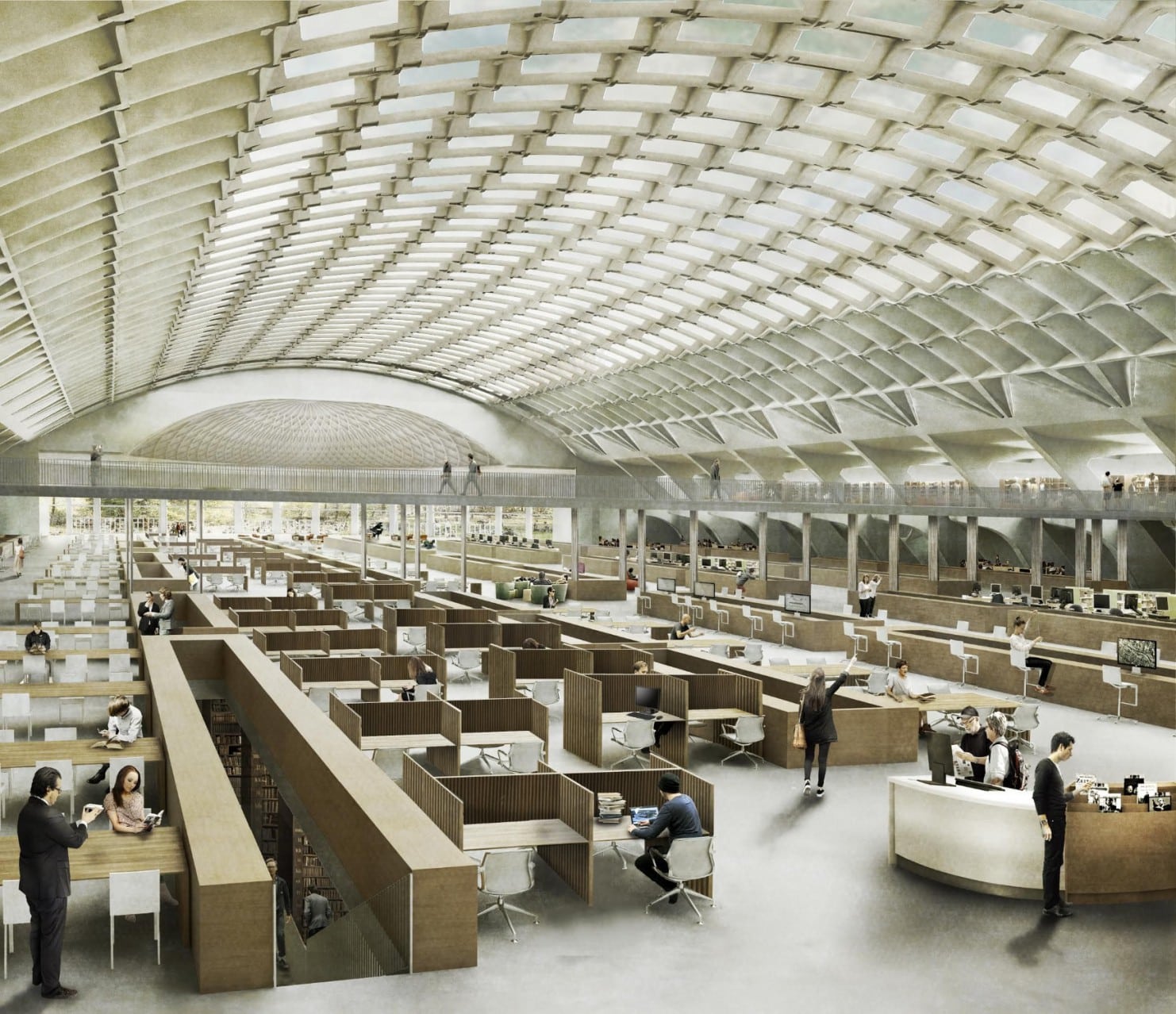
Look up and the ceiling is a vault of ribbed concrete, banded with skylights that run the whole length of the hall. Look down and there is a garden: trees planted in a sunken court carved out of the floor, with reading desks fanning out on either side. From December this room will be the largest reading room in Europe.
It belongs to Torino Esposizioni, the exhibition complex along Parco del Valentino that Pier Luigi Nervi rebuilt for Fiat in 1947 and that has been waiting for a second life since 1989. The hall looks straight onto the Po. It now sits at the centre of Vale, a new cultural district forming around the park: the name points to Valentino, and to the idea of value.
Not a building, a district

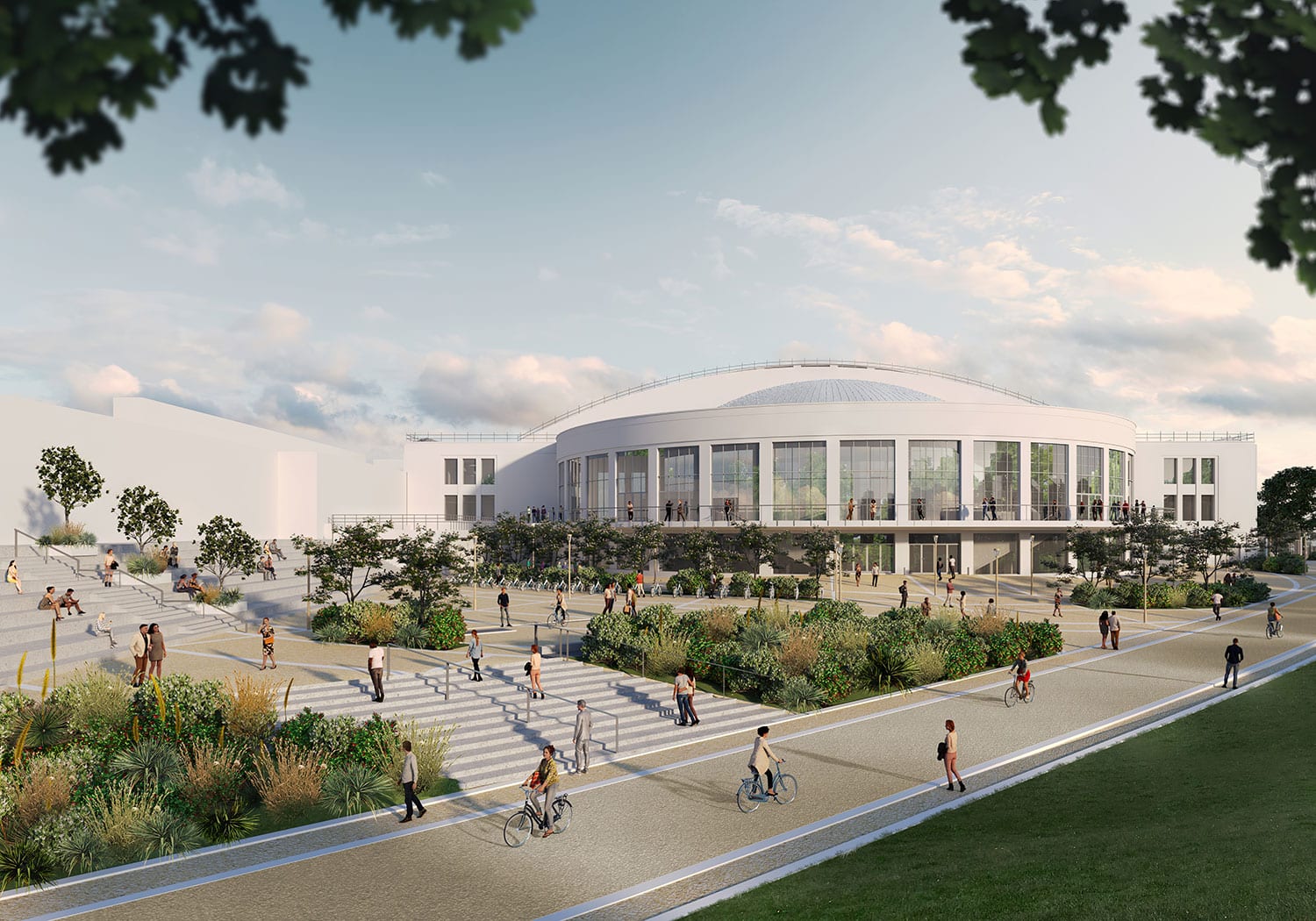
What makes Vale worth watching is that it is not a building. The plan ties together institutions that already exist but have never worked as a system: the new Central Public Library inside Nervi’s pavilion, the Borgo Medievale built for the 1884 General Italian Exhibition, the Teatro Nuovo still under construction, a new Politecnico campus for architecture, design and urban planning, the University of Turin, the Botanical Garden that has been there since 1729, and the Po itself. Around them, more green space, less traffic, and a new square facing the complex.
“One of the largest urban projects in Turin’s recent history,” is how mayor Stefano Lo Russo describes it, “a project that brings together culture, academia, research, education, nature and public space.”
Inside the library

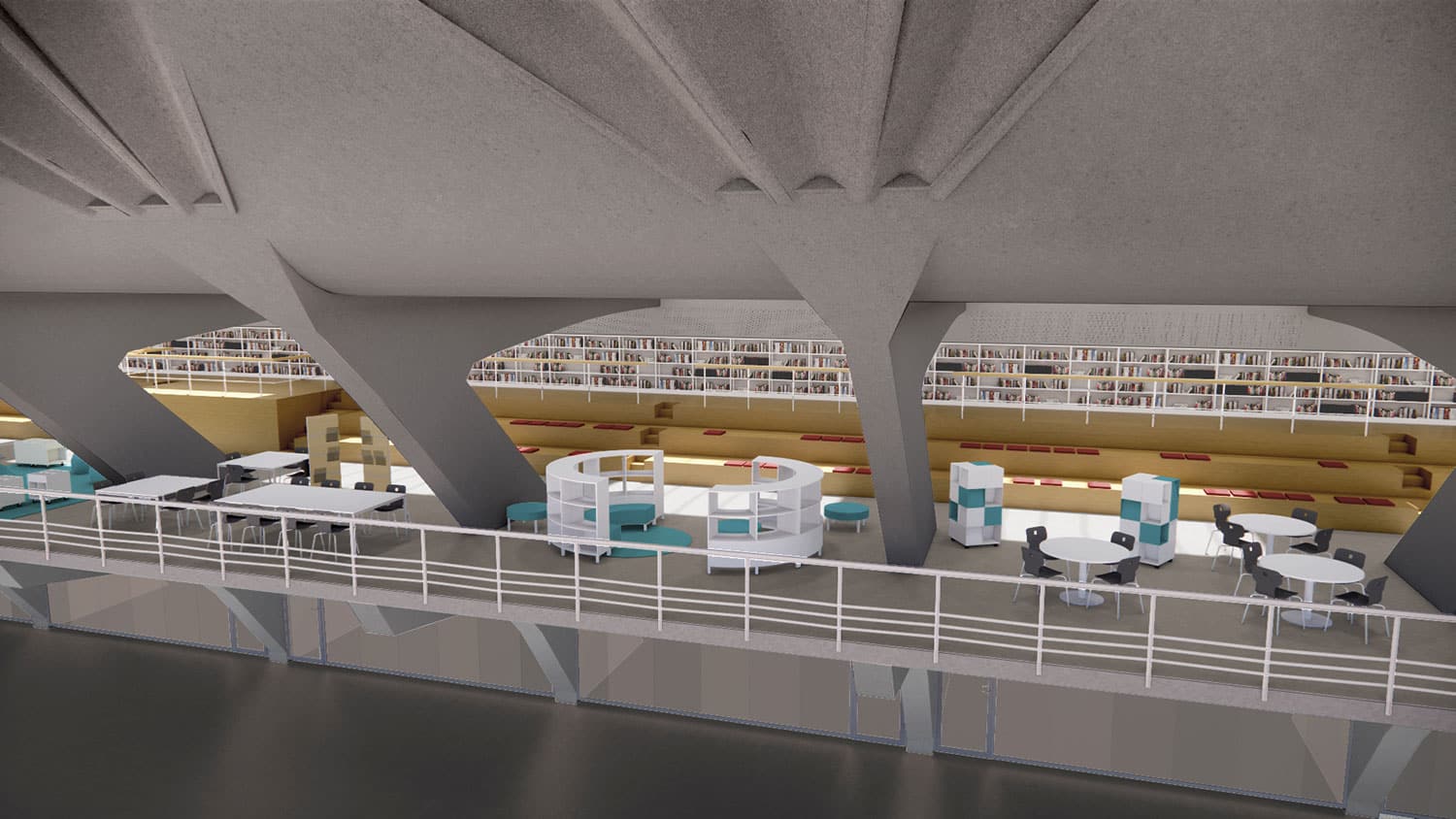
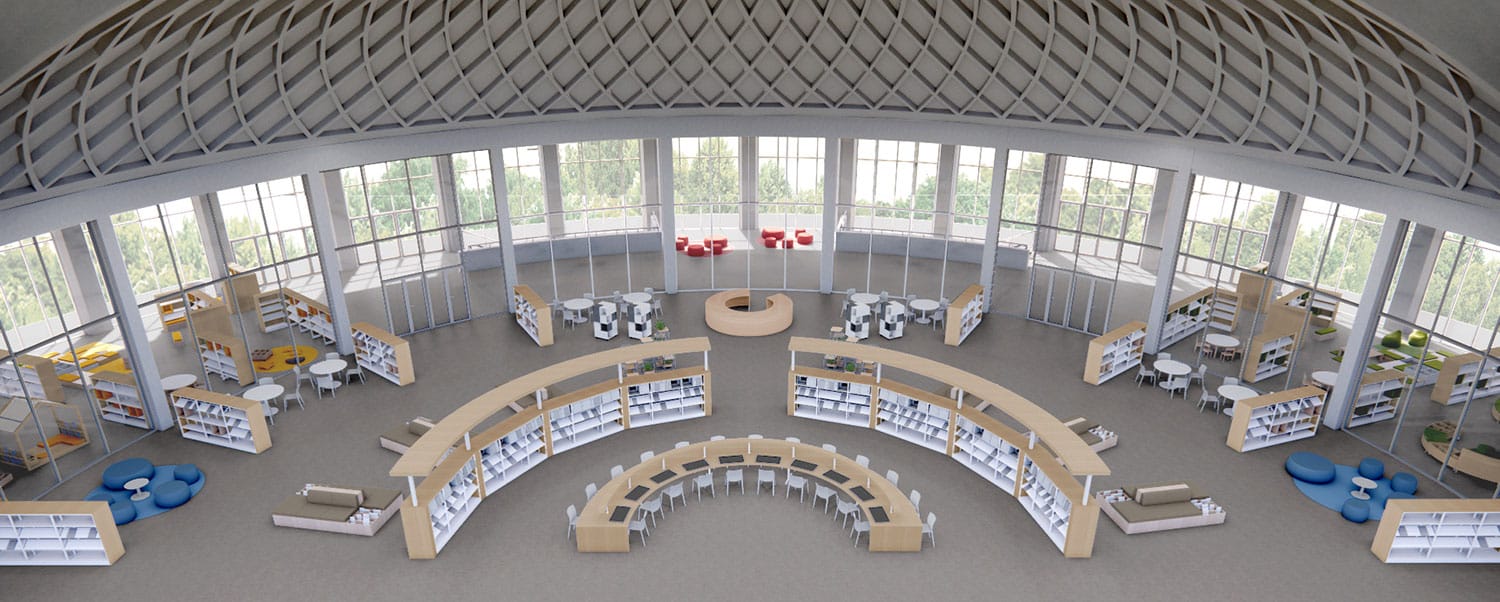
The library lands first. It opens on 11 December, free and open to everyone, with 19,380 square metres of public space and roughly 1,400 seats, formal and informal. The Sottsass pavilion takes the entrance, the cafe, the bookshop and a 100 seat auditorium. The galleries hold fiction, poetry, comics, manga, cinema, music and audiobooks. Elsewhere there are coworking areas, digital skills labs, rooms for exhibitions and for audio and music production. The underground level stores the historic and special collections, and the glazed apse under the lattice dome is handed to children and families.
Accessibility is built in rather than bolted on, with formats and technology for blind, low vision and dyslexic readers.
What the architects did, and did not, touch

The conversion is signed by Isolarchitetti and Rafael Moneo’s Madrid studio with the engineering firm ICIS, a team that won the competition back in 2017. Their move is a restrained one. Books go into a new underground level so the hall above stays clear, later additions are stripped away, and the vaults are left to do the talking. In 2019 the Getty Foundation funded a conservation master plan for the building, which tells you how carefully the structure is being handled.
The figures are not small either. In 2021 the project secured 100 million euros through Italy’s National Recovery and Resilience Plan. Fondazione CRT has added 7 million for the library and the park, on top of the 32 million it had already committed to regeneration work across the city, and Fondazione Compagnia di San Paolo is backing the revival of the Borgo. “A public library, open and accessible, is one of the most democratic pieces of infrastructure a city can offer,” says Anna Maria Poggi, president of Fondazione CRT.
Open before it opens
The programme starts before the doors do. Events run from November, the library’s own calendar opens in January, and from 2027 the district will host Biennale Democrazia, the Torino Jazz Festival, the Salone Internazionale del Libro and MITO. Programming is curated by Fondazione per la Cultura Torino under Maurizia Rebola, with Reale Mutua backing it for three years to 2028, which suggests this is meant to outlast the ribbon cutting. All of it feeds Turin’s bid to become European Capital of Culture in 2033.
We have watched plenty of modernist landmarks restored into silence. This one is being handed back with a job to do.
Vale, Parco del Valentino, Turin. Central Public Library by Isolarchitetti, Rafael Moneo and ICIS. Opening 11 December 2026. Programme and calendar at valetorino.it.